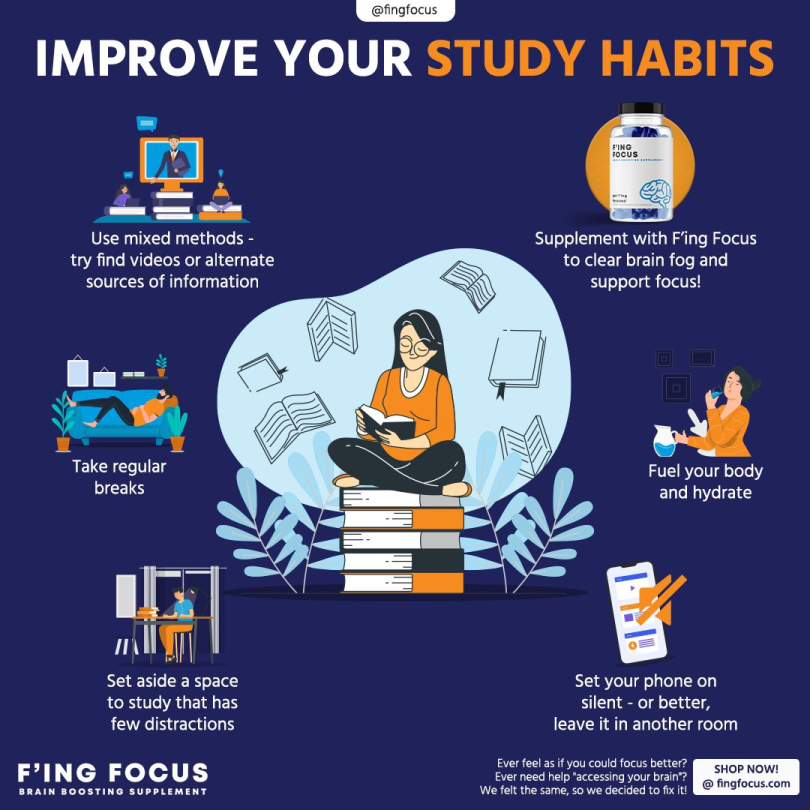

Introduction
Smart study habits can completely change the way students learn, remember information, and perform in exams. Many students spend long hours studying but still struggle to achieve the results they want. The problem is often not a lack of effort. Instead, it is the absence of effective learning methods and consistent routines. When students understand how to study in a smarter way, they can save time, improve concentration, and feel more confident about their progress.
In today’s fast-moving world, distractions are everywhere. Social media notifications, gaming, television, and constant multitasking make it difficult for students to stay focused. Because of this, developing smart study habits has become more important than ever. Good study techniques not only improve academic performance but also help students manage stress and maintain a healthy balance between studies and personal life.
Another important benefit of smart study habits is long-term learning. Instead of memorizing information for a single exam, students learn how to understand and retain knowledge for future use. These habits support critical thinking, better decision-making, and stronger problem-solving abilities.
Whether you are a school student, college learner, or someone preparing for competitive exams, smart study habits can help you reach your goals faster. This guide explains practical strategies, useful examples, and expert tips that can help beginners and intermediate learners create better study routines and achieve consistent success.
What Is Smart Study Habits?
Smart study habits are effective learning practices that help students study efficiently rather than simply studying for long hours. These habits focus on understanding concepts, managing time wisely, improving memory, and maintaining concentration during study sessions.
Students with smart study habits know how to organize their tasks, avoid distractions, and use techniques that improve retention. They do not depend entirely on last-minute preparation. Instead, they build a consistent routine that supports continuous improvement.
Some examples of smart study habits include:
- Creating a study timetable
- Taking short breaks during study sessions
- Reviewing notes regularly
- Practicing active learning
- Setting realistic goals
- Using memory techniques
- Avoiding multitasking
These habits help students study with purpose and direction. Instead of feeling overwhelmed, they learn how to handle subjects step by step.
Smart study habits are not limited to highly intelligent students. Anyone can develop these habits with practice and consistency. Even small improvements in daily routines can produce significant academic results over time.
Why Is Smart Study Habits Important?
Smart study habits are important because they help students learn effectively without unnecessary stress. Many students waste hours reading the same material repeatedly without understanding it properly. Smart learning strategies make studying more productive and enjoyable.
One major advantage is improved time management. Students who follow organized routines can complete assignments on time and prepare for exams without panic. This reduces pressure and creates a healthier learning environment.
Another reason smart study habits matter is better memory retention. Techniques such as spaced repetition, note summarization, and self-testing help students remember information for longer periods.
Smart study habits also improve confidence. When students understand their subjects clearly, they participate more actively in class discussions and exams. They feel more prepared and motivated to continue learning.
These habits also support mental health. Poor study routines often lead to stress, burnout, and frustration. Smart learning practices encourage balance, regular breaks, and realistic expectations.
In addition, smart study habits help students develop valuable life skills. Time management, discipline, goal setting, and problem-solving are useful not only in education but also in professional careers.
Students who study smartly often achieve better grades while spending less time feeling confused or distracted. This is why effective study habits are considered essential for academic and personal growth.
Detailed Step-by-Step Guide
Set Clear Study Goals
Every successful study routine begins with a clear goal. Students should know exactly what they want to achieve before starting a study session.
For example, instead of saying, “I will study science today,” a student can say, “I will complete chapter three and solve ten practice questions.” Clear goals improve focus and direction.
Short-term goals help students stay motivated. Long-term goals provide a sense of purpose and encourage consistent effort.
Create a Realistic Study Schedule
A study timetable helps students organize their tasks and avoid last-minute pressure. The schedule should include study hours, break times, revision sessions, and personal activities.
Students should avoid making unrealistic plans. Studying continuously for many hours usually leads to mental exhaustion. A balanced timetable is more effective.
It is also helpful to study difficult subjects during hours when energy levels are highest. Many students focus better in the morning, while others prefer evening study sessions.
Choose a Good Study Environment
The study environment has a strong impact on concentration. A quiet, clean, and organized space helps students focus better.
Students should keep unnecessary items away from their desks. Mobile phones and social media notifications can interrupt concentration and reduce productivity.
Good lighting and comfortable seating are also important. Physical discomfort often affects learning performance.
Use Active Learning Techniques
Reading notes repeatedly is not always enough. Active learning helps students engage with information more effectively.
Some useful active learning methods include:
- Asking questions while studying
- Explaining concepts aloud
- Teaching another person
- Solving practice exercises
- Creating summaries and diagrams
These techniques improve understanding and make learning more interactive.
Practice Time Management
Time management is one of the most important smart study habits. Students should divide large tasks into smaller sections.
The Pomodoro Technique is a popular strategy. Students study for twenty-five minutes and then take a short five-minute break. After several sessions, they take a longer break.
This method improves concentration and prevents mental fatigue.
Take Effective Notes
Good note-taking helps students review important information quickly. Notes should be short, organized, and easy to understand.
Students can use headings, bullet points, and keywords to simplify complex topics. Writing information in personal language often improves memory.
Color coding and highlighting can also make notes more visually appealing.
Revise Regularly
Revision is essential for long-term learning. Many students forget information because they only study it once.
Regular revision strengthens memory and helps students identify weak areas. Weekly review sessions are especially useful.
Spaced repetition is an effective method where students review information at increasing intervals.
Avoid Multitasking
Many students believe multitasking saves time, but it usually reduces focus and understanding.
Listening to music, checking social media, and studying at the same time can lower productivity. Smart study habits encourage students to focus on one task at a time.
Single-task learning improves concentration and helps students complete work more efficiently.
Stay Healthy and Active
Physical health affects mental performance. Students who sleep properly, exercise regularly, and eat healthy meals often study more effectively.
Lack of sleep reduces memory and concentration. Drinking enough water and avoiding excessive junk food can also improve focus.
Short physical activities during breaks help refresh the mind and reduce stress.
Use Technology Wisely
Technology can support learning when used correctly. Educational apps, online lectures, and digital flashcards are useful tools.
However, students should avoid spending too much time on entertainment during study hours.
Using technology with discipline helps students gain information quickly while maintaining productivity.
Build Consistency
Consistency is more important than studying for extremely long hours occasionally. Small daily efforts create stronger learning habits.
Students who study regularly usually understand subjects better than those who depend on last-minute preparation.
Even one productive hour every day can produce excellent results over time.
Test Yourself Frequently
Self-testing is one of the most powerful learning strategies. It helps students evaluate their understanding and improve memory.
Practice quizzes, mock exams, and sample papers prepare students for real exam situations.
Testing also reduces fear and increases confidence before important assessments.
Stay Motivated
Motivation helps students continue working even when subjects become challenging.
Students can stay motivated by rewarding themselves after completing goals. Watching progress over time also increases confidence.
Positive thinking and supportive friends or family members can make learning more enjoyable.
Benefits of Smart Study Habits
Smart study habits provide many academic and personal benefits.
- Improve concentration and focus
- Increase memory retention
- Reduce exam stress and anxiety
- Help students manage time effectively
- Improve academic performance
- Encourage self-discipline
- Build confidence during exams
- Support long-term learning
- Create balanced daily routines
- Reduce procrastination
- Improve problem-solving skills
- Help students achieve goals faster
Students who develop these habits often feel more organized and prepared in both education and daily life.
Disadvantages / Risks
Although smart study habits are highly beneficial, students may still face certain challenges.
- Building new routines takes time and patience
- Some students may become overly strict with schedules
- Excessive planning can reduce flexibility
- Comparing progress with others may create pressure
- Students may lose motivation if goals are unrealistic
- Overstudying can lead to mental exhaustion
- Relying too much on technology may increase distractions
These risks can be managed by maintaining balance and making gradual improvements.
Common Mistakes to Avoid
Many students unknowingly follow habits that reduce learning efficiency. Avoiding these mistakes can improve academic performance significantly.
One common mistake is studying without a plan. Random study sessions often waste time and reduce productivity. Students should always know what they need to complete.
Another mistake is memorizing without understanding. True learning happens when students understand concepts clearly instead of simply repeating information.
Procrastination is also a major problem. Delaying work creates unnecessary stress and reduces preparation time.
Many students ignore revision until exam week. Regular revision is much more effective than last-minute studying.
Using mobile phones during study sessions is another common issue. Notifications interrupt concentration and make it harder to stay focused.
Students should also avoid comparing themselves constantly with others. Every learner has a different pace and learning style.
Skipping sleep before exams is harmful as well. Lack of rest affects concentration, memory, and problem-solving abilities.
Finally, students should not depend entirely on passive learning methods. Active participation and practice are essential for long-term success.
FAQs
What are smart study habits?
Smart study habits are effective learning practices that improve focus, understanding, memory, and productivity. They help students study more efficiently and achieve better academic results.
How can students improve concentration while studying?
Students can improve concentration by choosing a quiet environment, avoiding distractions, taking short breaks, and focusing on one task at a time. Regular sleep and exercise also improve attention.
Why is time management important for students?
Time management helps students complete tasks on schedule, reduce stress, and maintain balance between studies and personal activities. It also improves productivity and discipline.
How often should students revise their notes?
Students should revise regularly instead of waiting until exams. Weekly revision sessions and short daily reviews help strengthen memory and improve understanding.
Are study breaks necessary?

Yes, study breaks are important because they refresh the mind and prevent mental exhaustion. Short breaks improve focus and maintain energy during long study sessions.
Can smart study habits improve exam performance?
Yes, effective study habits improve understanding, memory, confidence, and preparation. Students who study smartly are usually more organized and better prepared for exams.
What is the best study method for beginners?
Beginners should start with simple routines such as goal setting, note-taking, active learning, and regular revision. Consistency is more important than complicated techniques.
How can students stay motivated during studies?
Students can stay motivated by setting realistic goals, tracking progress, rewarding achievements, and maintaining positive thinking. Support from teachers and family members also helps.
Expert Tips & Bonus Points
Experts believe that successful learning depends more on consistency than intelligence. Students who practice smart study habits daily usually perform better over time.
One helpful tip is to begin studying with the most difficult subject first. Energy and concentration levels are often stronger at the beginning of a study session.
Students should also use visual learning techniques. Charts, diagrams, mind maps, and flashcards make information easier to understand and remember.
Another useful strategy is to teach concepts to someone else. Explaining information aloud strengthens understanding and reveals weak areas.
Experts also recommend keeping a progress journal. Writing down completed tasks increases motivation and helps students monitor improvement.
Changing study methods occasionally can prevent boredom. For example, students can alternate between reading, quizzes, group discussions, and practice exercises.
Maintaining a positive attitude is equally important. Students should focus on progress instead of perfection.
Using healthy rewards can also increase motivation. After completing study goals, students can relax with hobbies, music, or short walks.
Finally, students should remember that mistakes are part of learning. Every challenge provides an opportunity to improve skills and become more confident.
Conclusion
Smart study habits are essential for students who want to improve learning, reduce stress, and achieve academic success. Studying for long hours alone does not guarantee good results. What truly matters is using effective techniques that improve focus, understanding, and memory.
By creating clear goals, managing time wisely, revising regularly, and avoiding distractions, students can transform the way they learn. These habits help learners stay organized and confident while preparing for exams and assignments.
Another important advantage of smart study habits is personal growth. Students develop discipline, patience, and problem-solving abilities that support success beyond the classroom. These skills are useful in careers, relationships, and everyday responsibilities.
Building better study habits may take time, but small daily improvements can create lasting results. Students should avoid expecting instant perfection and instead focus on consistency and gradual progress.
Every learner has unique strengths and challenges. The key is to discover techniques that match individual learning styles and maintain a balanced routine. With dedication and smart strategies, students can study more effectively while enjoying the learning process.
In the end, smart study habits are not just about achieving higher grades. They are about developing confidence, independence, and a lifelong love for learning. Students who learn how to study smartly gain skills that continue benefiting them throughout their educational and professional journeys.