
Introduction
A daily study routine is one of the most effective ways to improve learning, manage time, and reduce stress. Many students struggle with distractions, poor planning, and inconsistent habits. As a result, they often feel overwhelmed before exams or assignments. However, a clear and balanced study plan can make learning easier and more enjoyable.
Students at beginner and intermediate levels usually believe that long study hours guarantee success. In reality, consistency matters more than spending endless hours with books. A smart daily study routine helps students stay focused, remember information longer, and complete tasks without pressure. It also creates discipline and confidence over time.
Every student has different learning preferences and schedules. Some prefer studying early in the morning, while others focus better at night. The key is to build a routine that matches personal goals and energy levels. A practical routine should include study sessions, short breaks, revision time, and healthy activities.
This guide explains everything about creating an effective daily study routine. You will learn why it matters, how to design a realistic plan, common mistakes to avoid, and expert tips for long term success. By following these strategies, students can improve productivity and enjoy a more organized academic life.
What is Daily Study Routine?
A daily study routine is a planned schedule that helps students study regularly and effectively each day. It includes fixed study hours, subject planning, revision sessions, and breaks. Instead of studying randomly, students follow a structured plan that supports continuous learning.
A proper routine creates balance between school, homework, revision, and personal activities. It also helps students avoid procrastination and last minute stress. Whether someone is preparing for school exams, college assignments, or competitive tests, a study routine improves consistency and focus.
For example, a student may decide to study mathematics for one hour in the morning, review science notes in the afternoon, and practice English writing at night. This organized approach makes learning smoother and easier to manage.
Why is Daily Study Routine Important?
A daily study routine is important because it builds discipline and improves academic performance. Students who study regularly usually understand topics more clearly and remember lessons longer.
Here are some reasons why a study routine matters:
- It improves concentration and focus.
- It reduces exam stress and anxiety.
- It saves time by creating organization.
- It increases productivity and efficiency.
- It helps students develop self discipline.
- It creates healthy learning habits for the future.
A routine also encourages students to manage their responsibilities properly. Instead of rushing through work, they can complete tasks step by step. This creates confidence and reduces mental pressure.
Detailed Step-by-Step Guide
Step 1: Set Clear Study Goals
The first step in building a successful daily study routine is defining clear goals. Students should know what they want to achieve each day and each week.
Goals may include:
- Completing homework on time.
- Improving grades in difficult subjects.
- Preparing for exams.
- Reading extra learning materials.
- Practicing problem solving skills.
Clear goals provide direction and motivation. They also help students measure progress and stay focused.
Step 2: Create a Realistic Timetable
A timetable is the foundation of an effective study routine. Students should design a schedule that matches their daily activities and energy levels.
Important tips for creating a timetable include:
- Choose fixed study hours every day.
- Divide time between subjects.
- Include short breaks between sessions.
- Keep time for hobbies and relaxation.
- Avoid unrealistic study targets.
For example, studying for two focused hours daily is usually better than forcing eight exhausting hours once a week.
Step 3: Choose a Comfortable Study Space
The study environment directly affects concentration. Students should choose a quiet and clean space with minimal distractions.
A productive study area should include:
- A comfortable chair and desk.
- Good lighting.
- Organized books and materials.
- Limited noise and distractions.
- A charged laptop or necessary tools.
Studying in a proper environment improves focus and reduces mental fatigue.
Step 4: Prioritize Difficult Subjects
Many students avoid difficult subjects because they seem stressful. However, challenging topics should receive more attention during high energy hours.
For example:
- Study mathematics in the morning if concentration is stronger early in the day.
- Practice language learning when the mind feels relaxed.
- Keep easier subjects for later sessions.
This strategy increases learning efficiency and prevents frustration.
Step 5: Use Active Learning Techniques
Reading books repeatedly is not always effective. Active learning methods improve understanding and memory retention.
Useful active learning techniques include:
- Taking notes while studying.
- Teaching concepts to others.
- Solving practice questions.
- Using flashcards.
- Creating mind maps.
- Summarizing lessons in personal words.
These methods keep the brain engaged and make learning more interactive.
Step 6: Take Regular Breaks
Long study sessions without breaks often reduce productivity. Short breaks refresh the mind and improve concentration.
Students can try the following method:
- Study for forty five minutes.
- Take a ten minute break.
- Return with fresh energy.
During breaks, students should stretch, drink water, or walk around instead of using social media continuously.
Step 7: Revise Daily Lessons
Revision is an essential part of every daily study routine. Reviewing lessons regularly helps students remember information for a longer period.
A simple revision strategy includes:
- Reviewing class notes each evening.
- Revising difficult topics every weekend.
- Solving previous questions regularly.
- Creating short summary notes.
Daily revision reduces pressure before exams and improves confidence.
Step 8: Avoid Distractions
Distractions are one of the biggest challenges for students. Mobile phones, television, and social media can waste valuable study time.
Students can reduce distractions by:
- Turning off unnecessary notifications.
- Keeping phones away during study sessions.
- Using website blockers if needed.
- Informing family members about study time.
A focused environment increases productivity and helps students complete tasks faster.
Step 9: Maintain a Healthy Lifestyle
A healthy body supports a healthy mind. Students cannot follow a productive study routine without proper physical and mental health.
Healthy habits include:
- Sleeping seven to eight hours daily.
- Drinking enough water.
- Eating nutritious meals.
- Exercising regularly.
- Avoiding excessive caffeine and junk food.
Good health improves memory, concentration, and overall academic performance.
Step 10: Track Progress and Improve
Students should regularly evaluate their study routine and make improvements when necessary.
Questions to ask include:
- Which study hours feel most productive?
- Which subjects need extra attention?
- Are goals being achieved consistently?
- Are distractions affecting focus?
Tracking progress helps students adjust routines according to changing needs and academic goals.
Benefits of Daily Study Routine
A well planned daily study routine offers several advantages for students.
- Improves time management skills.
- Builds self confidence and discipline.
- Reduces last minute exam pressure.
- Enhances concentration and memory.
- Encourages regular revision habits.
- Increases productivity and efficiency.
- Creates balance between study and personal life.
- Helps students achieve academic goals.
- Supports long term learning success.
- Reduces stress and mental exhaustion.
Students who follow a routine usually feel more organized and motivated throughout the academic year.
Disadvantages and Risks
Although a daily study routine is highly beneficial, there can be some disadvantages if it is poorly managed.
- Extremely strict schedules may create stress.
- Lack of flexibility can cause frustration.
- Studying for long hours may lead to burnout.
- Unrealistic goals may reduce motivation.
- Ignoring rest and hobbies can affect mental health.
- Repetitive routines may become boring.
Students should maintain balance and avoid making routines too demanding.
Common Mistakes to Avoid
Many students fail to maintain a successful daily study routine because of common mistakes. Understanding these problems can help students improve their habits.
One common mistake is creating unrealistic schedules. Some students plan to study for many hours without considering energy levels or responsibilities. This often leads to disappointment and exhaustion.
Another mistake is multitasking during study sessions. Watching videos, chatting with friends, and studying at the same time reduces concentration and learning quality.
Skipping breaks is also harmful. Continuous studying without rest can lower focus and increase stress. Short breaks are necessary for mental recovery.
Many students ignore revision until exam season. Without regular revision, information is quickly forgotten. Reviewing lessons daily improves memory retention.
Studying in a noisy environment is another problem. Distractions make it difficult to focus and waste valuable time. Students should choose a quiet place whenever possible.
Finally, comparing study routines with others can reduce confidence. Every student learns differently. Instead of copying others completely, students should create routines that suit their personal needs.
FAQs
What is the best time for studying?
The best study time depends on personal preference and energy levels. Some students focus better in the morning, while others study more effectively at night. Students should choose hours when concentration feels strongest.
How many hours should students study daily?

Study hours vary according to academic goals and workload. Beginners may start with two to three focused hours daily, while advanced students may study longer. Quality matters more than total hours.
How can students stay motivated?
Students can stay motivated by setting realistic goals, tracking progress, rewarding achievements, and maintaining a positive mindset. Short breaks and healthy habits also improve motivation.
Is taking breaks during study important?
Yes, breaks are extremely important. They refresh the mind, reduce stress, and improve concentration. Short breaks after focused study sessions increase productivity.
Can a daily study routine reduce exam stress?
A regular study routine reduces exam stress because students prepare consistently instead of cramming at the last moment. Regular revision improves confidence and understanding.
What should students do if they miss a study session?
Missing one study session is normal. Students should avoid guilt and continue the routine the next day. Consistency over time matters more than perfection.
Expert Tips and Bonus Points
Students can improve their daily study routine by following expert recommendations.
- Start with small goals and increase gradually.
- Use planners or calendars for organization.
- Study difficult topics during high energy hours.
- Practice self testing instead of passive reading.
- Keep study materials organized.
- Stay away from unnecessary digital distractions.
- Reward progress after completing goals.
- Use positive affirmations to build confidence.
- Revise notes before sleeping for better memory retention.
- Stay patient because good habits take time to develop.
Students should also remember that consistency is more important than intensity. Studying a little every day creates stronger results than studying heavily once in a while.
Sample Daily Study Routine for Students
Creating a practical timetable is easier when students follow a clear example. The following routine is suitable for school and college students who want balance between study and personal life.
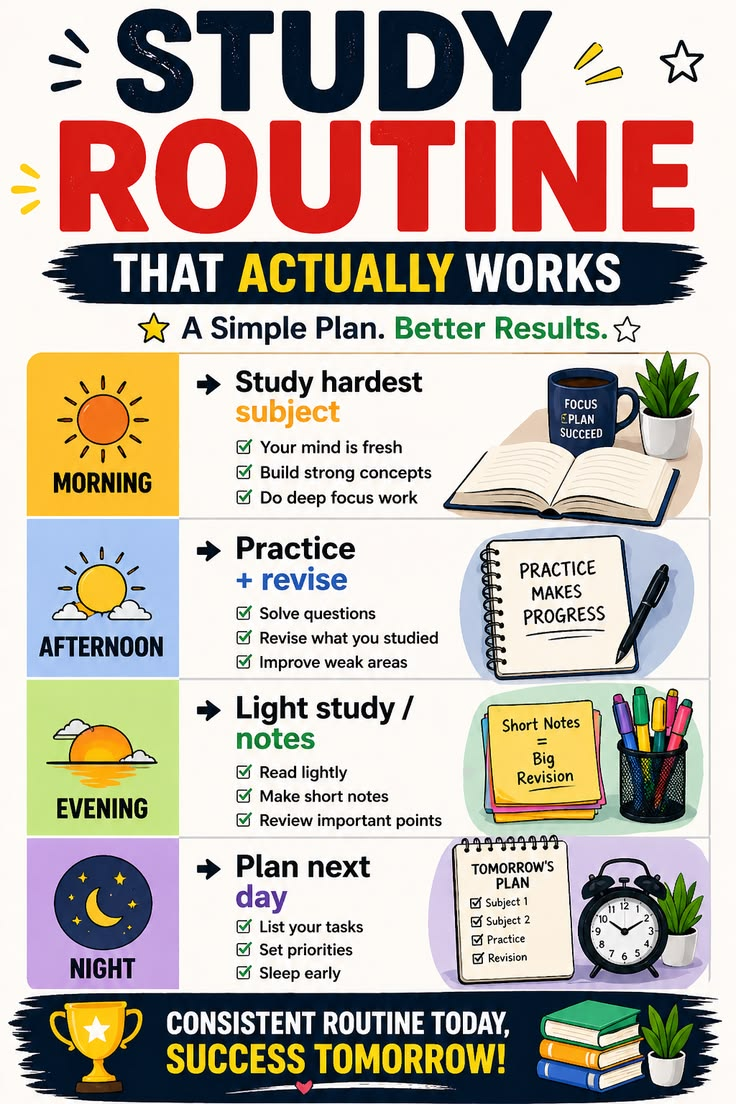
Morning Routine
Morning hours are often productive because the mind feels fresh and active. Students can use this time for difficult subjects that require deeper concentration.
Example morning schedule:
- Wake up at six thirty in the morning.
- Exercise or stretch for fifteen minutes.
- Eat a healthy breakfast.
- Review previous lessons for thirty minutes.
- Study a difficult subject for one hour.
Morning study sessions improve focus and help students remember information more effectively throughout the day.
Afternoon Routine
Afternoons are useful for completing homework, assignments, and revision tasks. Students can also use this period for group discussions or project work.
Example afternoon schedule:
- Attend school or college classes.
- Complete homework after lunch.
- Revise class notes for forty minutes.
- Practice exercises and sample questions.
Keeping afternoons organized prevents unfinished work from building up.
Evening Routine
Evening sessions should focus on lighter study activities and preparation for the next day.
A balanced evening routine may include:
- Reading notes and summaries.
- Organizing books and materials.
- Preparing goals for the following day.
- Spending time with family.
- Sleeping on time for proper rest.
Ending the day with preparation creates a calm and stress free mindset.
How Parents Can Support a Daily Study Routine
Parents play an important role in helping students maintain healthy learning habits. A supportive environment increases confidence and motivation.
Parents can help by:
- Encouraging regular study hours.
- Providing a quiet study space.
- Appreciating small achievements.
- Avoiding unnecessary pressure.
- Helping students maintain balance between study and relaxation.
Students perform better when they feel emotionally supported and understood.
Daily Study Routine for Exam Preparation
Exam preparation requires a slightly different approach because students must cover large amounts of material within limited time.
Important exam preparation strategies include:
- Divide subjects into smaller topics.
- Create weekly revision targets.
- Solve past papers regularly.
- Focus more on weak subjects.
- Avoid learning new topics at the final moment.
Students should also maintain healthy sleep patterns before exams. Lack of sleep can reduce memory and concentration.
Technology and Study Habits
Technology can either improve or damage a daily study routine depending on how students use it. Educational applications, online lectures, and digital notes can support learning. However, excessive entertainment and social media often reduce productivity.
Students can use technology wisely by:
- Watching educational videos.
- Using productivity applications.
- Setting reminders for study sessions.
- Joining online discussion groups.
- Limiting entertainment during study hours.
Balanced technology use helps students learn efficiently without wasting time.
Importance of Consistency in Learning
Consistency is the secret behind every successful study routine. Many students study seriously for a few days and then lose motivation. This pattern creates stress and weakens learning habits.
Studying regularly for shorter periods is more effective than studying heavily once in a while. Daily practice strengthens memory and improves understanding over time.
For example, practicing mathematics for thirty minutes every day usually produces better results than studying it for five hours only before exams. The brain remembers information more effectively through repetition and regular revision.
Students should focus on gradual progress instead of immediate perfection. Small improvements every day eventually lead to significant academic growth.
Motivation Strategies for Long Term Success
Maintaining motivation can sometimes be difficult, especially during stressful academic periods. Students should learn techniques that help them stay positive and determined.
Helpful motivation strategies include:
- Celebrating small achievements.
- Setting weekly academic targets.
- Keeping inspirational quotes nearby.
- Studying with supportive classmates.
- Taking healthy breaks when feeling tired.
Students should also remember their long term goals. Whether they want better grades, scholarships, or career opportunities, a strong daily study routine helps them move closer to success.
Building Confidence Through Study Habits
Confidence grows when students feel prepared and organized. A proper routine helps students complete tasks on time and understand subjects clearly.
Students who revise regularly usually participate more confidently in classrooms and examinations. They also experience less fear before tests because preparation becomes part of their daily habits.
Confidence is not built overnight. It develops slowly through discipline, practice, and patience. Every completed study session is a step toward stronger self belief and academic improvement.
Final Thoughts
Building an effective daily study routine takes time, effort, and consistency. Students may face challenges at the beginning, but steady practice eventually turns study habits into a natural part of life.
The most successful routines are simple, flexible, and realistic. Students should avoid putting too much pressure on themselves and instead focus on continuous improvement. Even small daily efforts can create meaningful results over time.
A balanced routine supports not only academic success but also mental and physical wellbeing. With proper planning, healthy habits, and positive motivation, students can enjoy learning and achieve their educational goals with confidence.
Students should remember that every learning journey is unique. Some days may feel highly productive, while other days may feel slow and challenging. This is completely normal. The goal of a daily study routine is not to create pressure but to build stability and progress over time.
Developing strong study habits also prepares students for future responsibilities beyond academics. Time management, discipline, organization, and consistency are valuable life skills that support personal and professional success. By practicing these habits daily, students become more responsible, focused, and confident in handling different challenges.
Most importantly, students should believe in their ability to improve. Patience, dedication, and regular effort always produce meaningful results in the long run.