
A lot of finance students hear about the CFA in their second or third year of college and spend the next two years confused about whether to go for it. Some think it is only for people already working in investment banking. Others assume it is similar to an MBA. Neither is quite right.
So let us start from the beginning.
What Is CFA
CFA stands for Chartered Financial Analyst. The credential comes from the CFA Institute, a US based global body that has been running this programme since 1963. As of 2026, over 227,000 professionals worldwide hold the CFA charter, working across investment firms, banks, research houses, and asset management companies.
What is CFA in practice? Think of it as a qualification that tells the market you can read financial statements, value assets, manage portfolios, and apply investment judgment under pressure. It is not a degree. It is a designation earned through three exams and verified work experience.
The exam is genuinely hard. Level I pass rates in 2025 were around 44 percent. Level II sat near 45 percent. These numbers reflect that the programme filters for people who put in serious study time.
How the CFA Course Is Structured
The CFA course has three levels. Each one tests a different skill set, and you have to clear them in order.
| Level | Core Focus | Format | 2026 Windows |
| Level I | Concepts and tools across ten subjects | 180 MCQs in two sessions | Feb, May, Aug, Nov |
| Level II | Asset valuation and application | Vignette based item sets | Feb, May, Aug |
| Level III | Portfolio management and wealth planning | Essays and item sets | Feb, Aug |
Level I
Level I is about building your base. You study across ten topic areas including quantitative methods, economics, financial statement analysis, equity, fixed income, derivatives, and alternative investments. Ethics runs through all three levels and is weighted seriously at every stage.
The exam format is 180 multiple choice questions across two 135 minute sessions. It sounds manageable until you realise how wide the syllabus actually is.
Level II
Level II drops the standalone question format. Here you get case studies, called vignettes, followed by a set of questions tied to that specific scenario. The jump in difficulty between Level I and Level II is something most candidates talk about. You are not just recalling concepts anymore. You are applying them to value a company or assess a portfolio decision.
Level III
Level III brings everything together. It has both an essay section and item sets. You are expected to build investment strategies, manage client portfolios, and make allocation decisions. Private wealth management and institutional portfolio construction get heavy coverage at this stage.
What the 2026 Curriculum Covers
The CFA Institute updates its curriculum every year. The ten topic areas have stayed consistent, but the depth and emphasis within them shifts.
In 2026, private markets content has grown noticeably. Private equity, private credit, and infrastructure now get more detailed treatment than they did even two years ago. Climate related financial risks have been woven into fixed income and portfolio management sections more explicitly. There is also expanded content on how technology and data analytics are changing research and trading workflows.
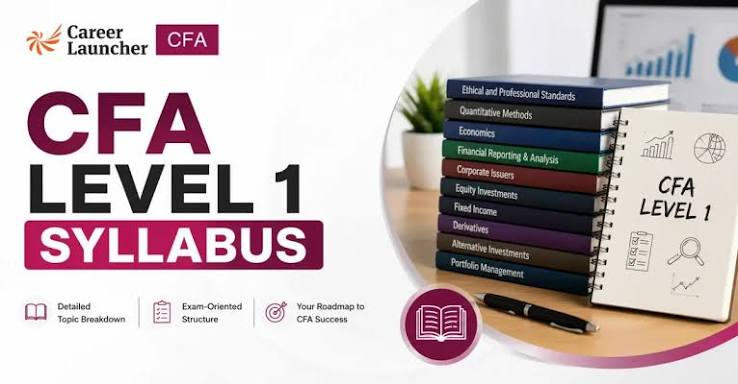
The ten topic areas across all CFA levels are:
- Ethical and Professional Standards
- Quantitative Methods
- Economics
- Financial Statement Analysis
- Corporate Issuers
- Equity Investments
- Fixed Income
- Derivatives
- Alternative Investments
- Portfolio Management and Wealth Planning
Ethics is not a topic you can deprioritise. The CFA Institute has built it into the scoring in a way that can affect your result even if you do well everywhere else.
Who Should Actually Do the CFA Course
This is where a lot of people go wrong. They register because the brand name sounds good without checking whether the career they want actually values it.
The CFA course makes the most sense for people heading toward:
- Equity research and stock analysis
- Portfolio and fund management
- Risk management at banks or asset managers
- Investment banking with a research or advisory angle
- Wealth management for high net worth clients
- Treasury and corporate finance at a senior level
If you want to work at a mutual fund, a hedge fund, a sovereign wealth fund, or an investment research firm, the CFA designation is actively looked for in job postings. Many senior roles at these firms list it as a preferred or required qualification.
If your goals sit more in accounting, audit, taxation, or financial planning, the CFA course is probably not the right fit. There are other designations better suited to those paths.
CFA Eligibility for 2026
To sit for Level I of the CFA course in 2026, you need one of these:
- A completed bachelor’s degree in any subject
- Enrollment in the final year of your bachelor’s programme
- 4,000 hours of relevant professional work experience
Even after passing all three exams, you cannot receive the CFA charter until you have completed 4,000 hours of qualified investment related work experience. That experience can be accumulated before, during, or after the exams.
CFA Time and Cost
The CFA Institute recommends a minimum of 300 study hours per level. Most candidates who clear on the first attempt report putting in closer to 350 to 400 hours per level. From the first exam to receiving the charter, the average timeline is three to five years.
Exam fees for 2026 are between USD 1,050 and USD 1,450 per level depending on registration timing. The CFA Institute also runs an Access Scholarship programme for candidates who cannot afford the standard fee.
Salaries After CFA in 2026
In India, CFA charterholders in research and portfolio roles typically earn between INR 10 lakh and INR 30 lakh annually at the mid level. Senior fund managers and heads of research at larger asset management firms earn well above that range.
In the US and UK, 2025 to 2026 salary data from industry surveys puts charterholders in investment management roles at USD 110,000 to USD 190,000 per year on average. The gap between a CFA holder and a non CFA candidate tends to be more visible at the mid to senior career stage than at entry level.
A Few Practical Points Before You Register
The May 2026 exam window is the next available entry point for new Level I candidates. Registration for February closed in late 2025.
Study materials come from the CFA Institute directly, but most candidates also use third party prep providers for mock tests and structured revision. Starting at least six months before your exam date gives you a realistic shot at clearing on the first attempt.
Thinking About Enrolling?
The CFA course rewards people who are disciplined, genuinely interested in investment analysis, and willing to stay consistent over several years. It is not the kind of qualification you finish in a few months. But for the careers it targets, very few credentials match what it carries.
If you are working through your preparation plan and want structured coaching across all three levels, Zell Education offers a CFA programme built around exam readiness and practical understanding of the curriculum.