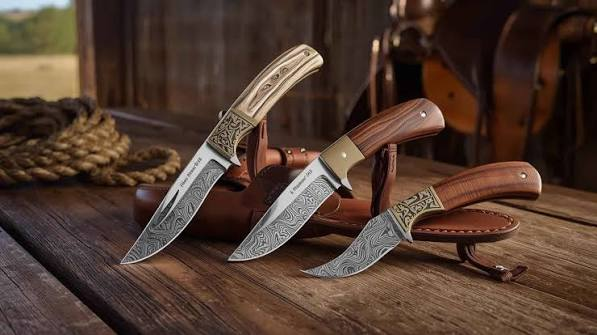

Two knives might appear nearly identical at first glance yet hold vastly different stories. One might come from a renowned maker, another from a mass-production line, and a third might feature unique materials that set it apart from the rest. For collectors, cowboy knives offer a blend of familiar style and unique character, transforming a widely recognized Western design into something worthy of closer inspection.
Collecting does not always mean owning the rarest or most expensive items. Sometimes, it is about finding objects that reflect a specific era, a tradition of craftsmanship, or a personal interest. Cowboy knives appeal to collectors because their designs can express all three elements through subtle variations in shape, finish, materials, and overall appearance.
Cowboy Knives Hold More Than Just One Story
Western-style knives are not defined by a single, static design. Their appearance varies depending on the maker, intended use, available materials, and the period of manufacture. Some versions prioritize practical function, while others feature ornate handles, engraved surfaces, or exquisitely crafted sheaths.
This diversity gives cowboy knives a broad identity within the collecting world. One person might be drawn to a traditional ranch knife, while another prefers a custom-made piece that offers a modern reinterpretation of the Western style. Other collectors might focus specifically on antiques or knives from particular manufacturers.
These differing interests create a market where personal taste plays a pivotal role. A knife that seems ordinary to one buyer might be deeply compelling to someone who has spent years studying a specific maker or design era.
The story behind an object can be just as significant as its appearance. Documentation, original packaging, maker’s marks, and a reliable ownership history can help reveal an item’s background. Without these details, a captivating description should not automatically be taken as proof that the knife is rare or holds significant historical value.
For many enthusiasts, satisfaction comes from discovering how subtle differences can alter an object’s character. Handle materials, blade shapes, or finishing techniques can reveal the choices that distinguish one design from another.
Quality Craftsmanship Endures Beyond Fleeting Trends
The collectibles market often experiences periods of brief enthusiasm for trendy materials or flashy designs. However, such attention does not always translate into lasting value. A product might attract a large online following yet struggle to sustain interest once the novelty wears off.
The enduring appeal of cowboy-style knives often stems from craftsmanship, the maker’s reputation, physical condition, and design consistency. Collectors may scrutinize the quality of the finish, the balance between handle and blade, and whether the knife reflects a distinct design tradition.
Handcrafted pieces can possess unique characteristics—qualities often lost in mass production. Subtle variations may reflect the maker’s approach, though sloppy construction should not be mistaken for an artistic trait; quality ultimately depends on precision workmanship.
Damascus knives add another dimension to this discussion. Their layered patterns can make a knife visually striking, yet the pattern itself does not guarantee rarity or superior quality. Evaluating a collectible knife requires considering the maker, material specifications, finish, condition, and supporting documentation.
Similar principles apply to decorative engravings and unconventional handle materials. These details can enhance a knife’s appeal, yet they gain greater significance when supported by a harmonious overall construction.
The Story Behind Materials and Finishes
Materials allow collectors to understand how design choices shape a knife’s character. Natural wood handles feature unique grain patterns, whereas synthetic materials offer a consistent appearance. Bone-style handles and other decorative options can evoke a more traditional aesthetic, depending on their composition and finish.
With cowboy knives, the interplay between materials is often more compelling than any single feature alone. A plain steel blade paired with a warm-toned wood handle creates a distinct impression compared to a patterned blade matched with a dark, glossy handle. Neither needs to be elaborate to possess a unique identity.
The surface finish also influences the perception of a knife. A high-polish blade can convey elegance and refinement, whereas a subdued or matte finish can reinforce an impression of functionality and ruggedness. Engraving adds a distinct visual dimension, particularly when it features Western motifs or the maker’s signature design style.
Collectors need to distinguish between genuine age, intentional finishes, and artificial signs of wear. A worn appearance does not necessarily indicate a long history. Likewise, a new knife inspired by vintage designs can still be a high-quality contemporary piece, provided its age and background are honestly disclosed.
Understanding these distinctions makes collecting more rewarding, as buyers respond to the object itself rather than relying solely on the seller’s narrative.
Damascus Knives and the Appeal of Unique Patterns
Patterned steel has become a favorite feature for those who appreciate the visual artistry of blade making. Damascus knives can display wavy patterns, flowing lines, or intricate designs, depending on the materials and manufacturing methods used. Even within similar pattern categories, the final appearance can vary from one knife to another.
Such visual variations offer a unique entry point for “Cowboy-style” knives into the custom and collectible knife market. Traditional Western proportions provide a familiar foundation, while patterned steel shifts the visual focus. This combination creates a contemporary feel without abandoning the influence of frontier-era design.
Nevertheless, collectors should look beyond mere surface appearance. Modern patterned steel is often created by joining different types of steel through forge-welding; its performance depends on the materials, heat treatment, geometry, and quality of craftsmanship. A stunning pattern cannot compensate for unreliable or flimsy construction.
A clear description of the materials is crucial, especially when sellers use terms like “handmade,” “custom,” or “limited edition.” The more specific and verifiable these claims are, the easier it is to understand what makes the item special.
For collectors, satisfaction lies in appreciating both the artistic aspects and the supporting facts. While a beautiful blade is captivating, a credible story regarding its maker and construction provides meaningful context for that beauty.
Condition, Provenance, and the True Value of a Piece
The value of a collectible knife is influenced by more than just its appearance in photographs. Physical condition, authenticity, the maker’s reputation, documented history, and current market demand all influence the price a buyer is willing to pay. There is no universal pricing formula that applies to every style or era.
When considering “cowboy knives,” collectors should note whether the item has been modified, repaired, refinished, or restored. Such changes are not necessarily negative, but they can affect historical authenticity and should be disclosed openly.
Provenance refers to an object’s documented history and—whenever possible—its chain of ownership. Solid documentation helps distinguish truly significant pieces from modern products marketed with compelling historical narratives. Claims regarding an item’s age or rarity warrant close scrutiny if supporting records are unavailable.
Storage and handling also affect long-term conditions. Humidity can impact the steel, natural handle materials may react to environmental changes, and careless storage can damage the finish. Safe, dry storage is crucial for preserving both the physical condition and the appearance of the object.
Collectors need not view every purchase as an investment. In fact, the best reason to collect is often personal interest. Market prices fluctuate, and future appreciation in value is never guaranteed. An object can remain valuable to its owner because it represents a tradition of craftsmanship, design preferences, or significant memories.
Collections Built on Personal Taste
The most compelling collections rarely adhere to a single definition of perfection. Some collections are built around the maker’s history, others focus on material experimentation, and many blend traditional craftsmanship with modern interpretations. Cowboy knives fit perfectly into this diverse landscape, as the category offers distinctive styles while still allowing room for individual expression.
A collection might feature restrained ranch-inspired designs alongside more decorative Damascus knives. The contrast can show how makers interpret the same broad tradition in different ways. One emphasizes proportion and simplicity; another draws attention to steel patterns, engraving, or unusual handles.
In the end, a knife becomes memorable when its details give the owner a reason to keep looking at it. That may be a carefully executed handle, a documented connection to a maker, or a design that captures a particular version of Western history.
Cowboy knives remain a collector’s wild card because they combine heritage with change. Their appeal is not limited to rarity or price. It lives in the decisions made by craftspeople, the stories supported by evidence, and the individual preferences that turn a collection into something personal.