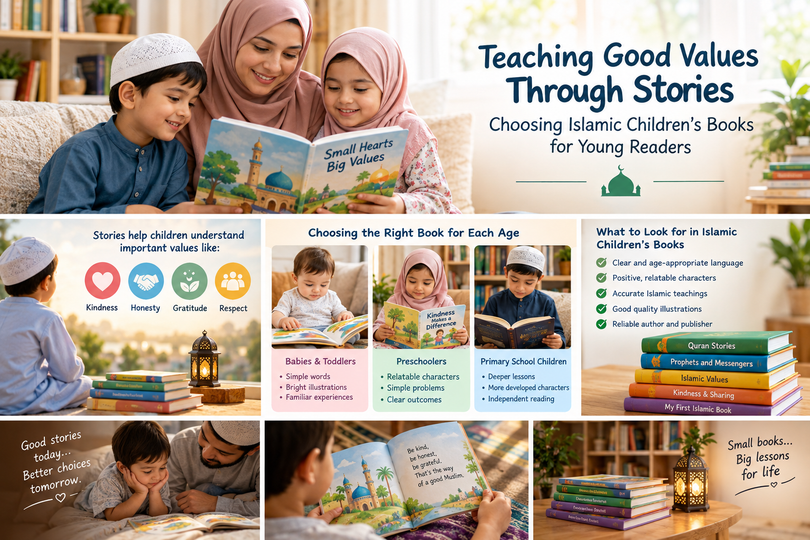

Children begin learning about kindness, honesty, gratitude, and respect through the everyday experiences they share with their families. As they grow, stories can help them understand these values in ways that feel natural, memorable, and easy to relate to. For parents in Malaysia, reading together offers a meaningful opportunity to introduce Islamic teachings while strengthening family relationships and encouraging a love of books.
Rather than relying only on instructions about right and wrong, parents can use stories to show how choices affect other people. A character who tells the truth, helps a friend, or expresses gratitude can give children a practical example they can understand. With age-appropriate books and simple conversations, story time can become an enjoyable part of a child’s moral and spiritual development.
Why Stories Help Children Understand Good Values
Young children often learn best through examples they can see and discuss. Abstract ideas such as honesty and patience can be difficult to understand when presented only as rules. Stories make these concepts more concrete by showing characters facing familiar situations and making decisions.
For example, a story about a child admitting a mistake can introduce the importance of honesty. A tale about sharing toys can help children understand kindness, while a story about appreciating a meal or thanking someone for their help can introduce gratitude.
Stories also allow children to explore feelings. They may recognise how a character feels after being left out or how happy someone becomes when another person offers help. These moments provide opportunities to discuss empathy and encourage children to consider how their own actions affect others.
Islamic stories can connect these everyday lessons with values encouraged in Islam, such as compassion, truthfulness, generosity, patience, and thankfulness to Allah. When parents explain these ideas in language children understand, moral lessons can become part of everyday family life rather than something discussed only during formal learning.
Choosing Islamic Storybooks for Different Ages
The best book depends on a child’s age, attention span, reading ability, and interests. Selecting stories that match these needs can make reading more enjoyable and help children understand the lessons being presented.
Babies and Toddlers: Simple Words and Familiar Experiences
For babies and toddlers, choose sturdy books with colourful illustrations, short phrases, and familiar subjects. Stories about family members, animals, sharing, and saying thank you can introduce early social and emotional concepts.
Parents can use simple language to connect a story with daily activities. For example, after reading about helping someone, you might encourage your toddler to pass a toy to a sibling or help put away a few books.
At this age, repetition is useful. Children may enjoy hearing the same story several times, gradually becoming familiar with its words and pictures. Keep reading sessions short and interactive, allowing your child to point at illustrations, repeat familiar phrases, and ask questions in their own way.
Preschoolers: Stories About Kindness, Honesty, and Gratitude
Children between three and six years old often enjoy stories with relatable characters, simple problems, and clear outcomes. Books about friendship, sharing, telling the truth, and caring for family members can help them recognise positive behaviour.
Islamic storybooks for this age group may also introduce prophets’ stories, age-appropriate accounts of Islamic history, and simple lessons connected to daily Muslim life. Choose reliable, carefully written material that presents religious teachings respectfully and accurately.
After reading, ask questions such as, “How do you think the character felt?” or “What could the character have done differently?” These questions help children reflect on the story instead of simply memorising its lesson.
Primary School Children: Deeper Lessons and Independent Reading
Older children can often explore stories with more developed characters, challenging situations, and multiple lessons. They may enjoy stories about keeping promises, showing patience during difficulties, helping people in need, and taking responsibility for their actions.
Some children will also be ready for more detailed accounts of the prophets and other important figures in Islamic tradition. Look for books that distinguish established religious accounts from fictional storytelling and present sensitive topics in an age-appropriate way.
Children who are beginning to read independently can benefit from short chapters, illustrations, and accessible vocabulary. Let them choose books that interest them, and encourage them to explain what they learned in their own words.
What to Look for When Selecting Islamic Children’s Books
Not every book that includes a moral lesson will suit every child. Before choosing a title, consider both the quality of the story and how easily your child can understand its message.
Clear and age-appropriate language: Sentences should match your child’s reading ability. Younger children benefit from simple explanations, while older readers can explore more complex ideas.
Positive, relatable characters: Characters who make mistakes, learn from experience, and try to do better can help children understand that developing good habits takes time.
Accurate Islamic teachings: For books presenting Quranic stories, prophetic accounts, or religious guidance, consider the author’s credentials, publisher, references, and overall reliability. When uncertain about a religious detail, consult a trusted teacher or knowledgeable religious authority.
Meaningful illustrations: Pictures can help young readers understand emotions, actions, and unfamiliar situations. They can also provide useful prompts for discussion.
Practical lessons: Look for stories that connect values with everyday behaviour, such as apologising after a mistake, sharing with others, respecting parents, and expressing gratitude.
When exploring Islamic books for children, parents should also consider how a book communicates its lesson. Stories that encourage reflection and compassion can be more helpful than those that rely heavily on fear or shame. Children need room to ask questions and learn gradually.
Make Bedtime Reading a Family Ritual
Bedtime is a convenient time for many families to enjoy stories together. A predictable reading routine can help children settle down while giving parents an opportunity to connect with them at the end of the day.
Choose a comfortable, quiet place and allow your child to select a story from a small collection. Reading for ten minutes may be enough, particularly for younger children. There is no need to finish a long book in one sitting.
You can make the routine meaningful by including a short reflection after the story. If the character showed kindness, ask your child to think of one kind thing they did that day. If the story focused on gratitude, invite everyone to share something they appreciated.
For Muslim families, bedtime reading can also complement existing family routines, such as making du’a or discussing the day’s experiences. The aim is to create a peaceful, positive habit rather than add another demanding task to the evening.
Parents should remember that children have different attention spans. Some will want to discuss every illustration, while others may prefer to listen quietly. Follow your child’s interests and keep the experience warm and relaxed.
Turn Story Time Into Meaningful Conversations
Reading a story is only one part of helping children understand its message. A brief conversation can help them connect what happened in the book with situations they may encounter at home, school, or in the community.
Here are a few ways to start those conversations:
- Discuss choices: Ask why a character made a particular decision and what other options were available.
- Explore feelings: Talk about how the characters might have felt and what could have made the situation better.
- Connect lessons with daily life: Ask whether your child has experienced something similar with a friend or sibling.
- Encourage practical action: Suggest one small way to practise the value, such as sharing, helping someone, or thanking a family member.
- Invite questions: Give children the freedom to express confusion or disagree with a character’s actions respectfully.
For example, after reading a story about honesty, you could ask what the child might do if they accidentally broke something at home. Listen to their answer before offering guidance. This encourages independent thinking while reinforcing the importance of telling the truth.
Avoid turning every story into a lecture. Sometimes, a simple conversation and a chance to enjoy the characters are enough. Values are more likely to become meaningful when children experience them consistently in their everyday lives.
Build a Small, Meaningful Home Library
Families do not need dozens of books to create a valuable reading routine. A carefully chosen collection that reflects a child’s age and interests can provide plenty of opportunities for learning and enjoyment.
Start with a few picture books about everyday values, add one or two Islamic stories suited to your child’s age, and gradually introduce more challenging titles as their reading skills develop. Include stories about different experiences, such as friendship, family responsibilities, generosity, and caring for others.
Parents searching for suitable titles may explore Wau Books’ curated children’s library as one option for discovering children’s reading materials. Review individual books for age suitability, subject matter, language level, and the accuracy of any religious content before making a selection.
Public libraries, school recommendations, and trusted local booksellers can also help families discover new titles. Borrowing books is a useful way to explore different subjects before deciding which ones to add permanently to your home collection.
Keep books somewhere children can easily reach them. Let them revisit favourites and choose what to read next. Repeated reading is valuable because children may notice different details or understand a lesson more deeply as they grow.
Lead by Example Beyond the Pages
Stories can introduce good values, but children also learn by observing the adults around them. When parents speak honestly, show patience, express gratitude, and treat others with respect, they reinforce the lessons children encounter in books.
Simple everyday actions can make these values more visible. Thank someone who helps your family, apologise when you make a mistake, or involve your child in preparing something to share with a neighbour. You can then connect these experiences with stories you have read together.
It is also important to recognise effort rather than expecting perfect behaviour. Children will sometimes forget to share, become frustrated, or struggle to tell the truth. Responding with calm guidance gives them an opportunity to understand their mistakes and practise better choices.
Over time, combining stories with real-life examples helps children see that kindness, honesty, and gratitude are not simply ideas found in books. They are values that can guide everyday decisions and relationships.
Conclusion
Islamic children’s stories can provide families with a gentle, engaging way to introduce kindness, honesty, gratitude, and other important values. By selecting age-appropriate books, establishing a regular bedtime reading routine, and discussing characters’ choices, parents can help children connect meaningful lessons with their own experiences.
For families in Malaysia, a small home library that includes reliable Islamic stories and relatable everyday narratives can support both reading development and family conversations. There is no need to rush or expect children to understand every lesson immediately.
The most important step is to make reading a positive shared experience. With patience, thoughtful book choices, and good examples at home, parents can help children develop a love of stories while gradually learning how to put their values into practice.