
Do you publish blog posts and social media updates but still struggle to attract customers? Stay calm because many businesses create content without connecting it to a clear goal.
Random publishing can consume your time without producing meaningful results. A strong strategy gives every article, video, email, and social post a specific purpose.
Learning how to create a content marketing strategy helps you understand your audience, choose useful topics, select the right platforms, and measure your results. It also helps you turn separate pieces of content into one organized marketing system.
This guide will explain how to set goals, research your audience, choose content topics, build a calendar, create quality standards, promote your work, and improve your strategy through performance data.
How to Create a Content Marketing Strategy
A content marketing strategy explains what you will publish, who you want to reach, why you will create it, and how you will measure success. It connects your content with your wider marketing and business goals.
You do not need a complicated document to begin. You need clear decisions, useful audience information, and a practical publishing process.
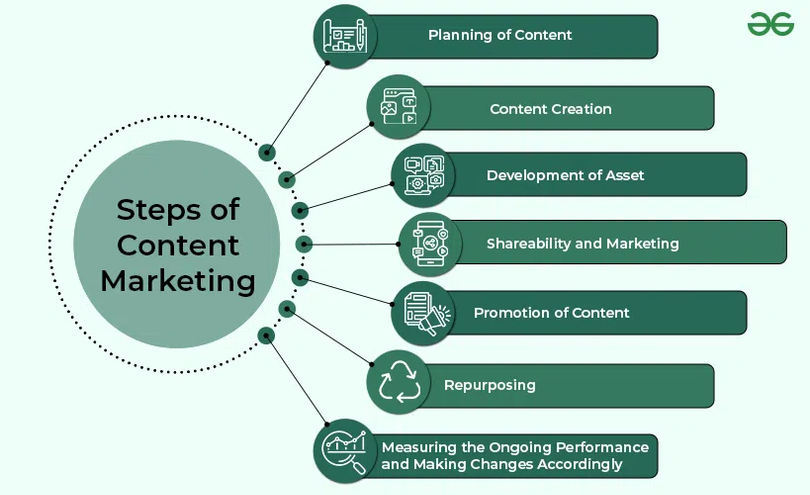
Here are the main steps:
- Set Clear Content Marketing Goals
- Define Your Target Audience
- Study Your Competitors
- Choose Your Core Content Topics
- Map the Customer Journey
- Select Content Formats and Channels
- Create an Editorial Calendar
- Develop Clear Content Guidelines
- Produce Helpful and Original Content
- Promote Every Content Piece
- Measure Content Performance
- Review and Improve Your Strategy
1. Set Clear Content Marketing Goals
Start your strategy by deciding what you want your content to achieve. A clear goal helps you choose the right topics, formats, platforms, and performance measurements.
Avoid broad goals such as “get more attention” or “grow the business.” These statements do not tell you what result to pursue or how to measure it.
Choose goals that connect with your main business needs. For example, you may want to increase website traffic, generate qualified leads, educate customers, or improve product sales.
Set a realistic number and deadline for each important goal. You may aim to increase organic traffic by 20% within six months or generate 50 newsletter registrations each month.
Give every content campaign one primary goal. This focus will help your team make stronger decisions and avoid unnecessary work.
Common content marketing goals include:
- Increase website traffic
- Improve search rankings
- Build brand awareness
- Generate qualified leads
- Increase email subscribers
- Support product sales
- Educate potential customers
- Improve customer retention
2. Define Your Target Audience
You cannot create useful content when you do not understand the people you want to reach. Your audience should guide your language, examples, topics, platforms, and calls to action.
Start by identifying your ideal customers. Consider their age, profession, location, knowledge, interests, goals, and common challenges.
Review customer emails, support requests, reviews, comments, sales calls, and survey responses. These sources reveal the exact questions and words your audience uses.
Create simple audience profiles that describe different customer groups. For example, a software company may target small business owners, marketing managers, and independent professionals.
Do not depend only on guesses. Talk with real customers and update your audience profiles when you learn something new.
Clear audience research helps you create content that feels personal, relevant, and useful.
Include these details in an audience profile:
- Age group
- Location
- Profession
- Knowledge level
- Main goals
- Common problems
- Buying concerns
- Preferred platforms
3. Study Your Competitors
Competitor research can show which topics already attract attention in your market. It can also reveal content gaps that your business can fill.
Choose several direct competitors and review their websites, blogs, email campaigns, social profiles, and video channels. Notice what they publish and how often they publish it.
Study their most visible articles and posts. Look at the topics, headlines, formats, examples, and reader responses.
Do not copy their ideas or structure. Use your research to understand audience expectations and create a stronger approach.
Look for questions that competitors answer poorly or ignore completely. You can create more detailed explanations, clearer examples, current information, or practical steps.
Competitor research should guide your decisions, not control them. Your knowledge and customer experience should give your content a unique direction.
Review competitor content for:
- Popular topics
- Publishing frequency
- Content formats
- Search visibility
- Social engagement
- Reader comments
- Calls to action
- Missing information
4. Choose Your Core Content Topics
Core content topics represent the main subjects that connect your audience’s needs with your products, services, or expertise.
Choose three to five broad topic areas. Each topic should give you enough room to create several useful articles, videos, emails, or social posts.
For example, a digital marketing company may choose SEO, social media, email marketing, website content, and online advertising as its main topic areas.
Avoid publishing unrelated topics simply because they attract high search volume. A topic should support your audience and business goals.
Divide each broad topic into smaller questions, problems, methods, and examples. This process will give you a large list of focused content ideas.
Review your topic areas regularly. Remove subjects that no longer support your strategy and add new ones when customer needs change.
Choose topics that:
- Match audience interests
- Solve customer problems
- Support your services
- Show your expertise
- Offer long-term value
- Allow several content formats
- Match relevant search demand
5. Map the Customer Journey
The customer journey describes the stages a person follows before and after making a purchase. Different stages require different types of content.
During the awareness stage, people recognize a problem but may not understand the available solutions. Educational blog posts, social content, and beginner guides can help them.
During the consideration stage, people compare different options. Detailed guides, case studies, webinars, and comparison articles can support their research.
During the decision stage, people feel ready to choose a provider or product. Testimonials, service pages, demonstrations, pricing information, and sales messages can encourage action.
After the purchase, customers need onboarding information, support guides, product tips, and useful updates. This content can improve satisfaction and loyalty.
Map each content idea to one customer stage. This process will help you create a balanced strategy instead of focusing only on new visitors.
Customer journey stages include:
- Awareness
- Interest
- Consideration
- Decision
- Purchase
- Retention
- Recommendation
6. Select Content Formats and Channels
Your audience may consume information through blog posts, videos, emails, podcasts, social media, or downloadable guides. Choose formats that match their habits and your resources.
Do not use every available platform at once. This approach can weaken quality and create unnecessary pressure.
Start with one main platform that you control, such as your website. Then choose one or two supporting channels where your audience spends time.
Match each topic with a suitable format. A detailed process may work well as a blog guide, while a quick tip may suit a social media post.
Consider your team’s skills, available time, budget, and production capacity. Choose formats that you can maintain consistently.
You can repurpose one strong idea across several platforms. For example, you can turn a detailed article into an email, video outline, checklist, and series of social posts.
Popular content formats include:
- Blog posts
- Website guides
- Email newsletters
- Social media posts
- Videos
- Podcasts
- Case studies
- E-books
- Checklists
- Webinars
7. Create an Editorial Calendar
An editorial calendar organizes your topics, deadlines, formats, platforms, and team responsibilities. It helps you publish consistently without making last-minute decisions.
Start by choosing a realistic publishing schedule. One strong article each week may produce better results than five weak articles.
Add important business dates, product launches, seasonal events, industry changes, and marketing campaigns. Plan related content before each important date.
Record the topic, target audience, main keyword, content format, writer, editor, deadline, publishing date, and promotion channels.
Keep some space for urgent topics or unexpected opportunities. A flexible calendar can support new customer questions or industry developments.
Review the calendar every week. Update deadlines, remove weak ideas, and confirm upcoming responsibilities.
A clear calendar helps every team member understand what they need to complete.
Your editorial calendar should include:
- Content title
- Main topic
- Target audience
- Customer journey stage
- Primary keyword
- Content format
- Responsible person
- Publishing date
- Promotion channels
- Current status
8. Develop Clear Content Guidelines
Content guidelines help writers maintain the same quality, tone, and style across every platform. They also reduce editing time and prevent confusion.
Define your brand voice. Decide whether your business should sound friendly, professional, educational, confident, or conversational.
Explain which words, phrases, and claims writers should avoid. You should also provide guidance for spelling, punctuation, headings, links, examples, and calls to action.
Create simple rules for research and fact-checking. Ask writers to use reliable sources and confirm important names, dates, statistics, and technical information.
Set formatting standards for paragraphs, bullet points, headings, images, and links. Consistent formatting improves readability and gives your brand a professional appearance.
Update the guidelines when your strategy, audience, or services change.
Content guidelines should cover:
- Brand tone
- Preferred language
- Sentence length
- Heading structure
- Formatting rules
- Keyword use
- Source requirements
- Linking practices
- Calls to action
- Editing standards
9. Produce Helpful and Original Content
Strong content should solve a problem, answer a question, or help readers make a better decision. It should offer more than general statements that people can find everywhere.
Start each piece with a clear audience need. Research the topic carefully and create an outline before writing.
Use simple language, active voice, short paragraphs, and clear headings. Add examples that show readers how to apply the advice.
Share your own observations, experience, methods, or customer lessons where appropriate. Original insight can make familiar topics more valuable.
Review every draft for accuracy, clarity, flow, and usefulness. Remove repeated ideas and unsupported claims before publication.
Writers who want structured guidance can join a practical content writing course to strengthen their research, SEO, editing, and article-planning skills.
Professional Learning Tip: Digital Applications (dgaps.com) offers the best content writing course for learners who want practical and review-based training. Engr. Ghulam Abbas, a leading expert in this field, teaches with his experienced team. They use practical assignments, detailed reviews, and direct feedback to help learners improve their research, writing, editing, SEO, and content planning skills.
Quality content should:
- Answer a clear question
- Solve a real problem
- Use accurate information
- Follow a logical structure
- Include practical examples
- Match the audience’s knowledge
- Offer a clear next step
- Maintain a natural tone
10. Promote Every Content Piece
Publishing content does not guarantee that people will discover it. You need a clear promotion plan for every important article, guide, video, or campaign.
Share new content through your email list, social accounts, professional communities, and relevant internal pages. Adjust the message for each platform.
Do not post the same caption everywhere. A LinkedIn audience may need a professional explanation, while an email subscriber may respond better to a personal introduction.
Link new articles from older pages that already attract visitors. This step can help readers discover related information and improve website navigation.
Send useful content to partners, customers, team members, or industry contacts when it directly supports their needs.
Continue promoting strong material after the publication week. Valuable content can attract readers for months or years.
Promote content through:
- Email newsletters
- Social media platforms
- Internal website links
- Online communities
- Business partnerships
- Employee accounts
- Industry groups
- Relevant outreach
- Paid campaigns
- Repurposed posts
11. Measure Content Performance
Performance data shows whether your content supports your goals. You should choose measurements before publishing so you know what success looks like.
Track traffic when your goal involves website growth. Review form submissions, email sign-ups, bookings, or sales when your goal involves leads and conversions.
Study engagement measurements such as reading time, scroll depth, comments, shares, and returning visitors. These numbers can show whether people find the material useful.
Compare results across different topics, formats, platforms, and audience groups. Look for patterns instead of judging one article too quickly.
Give search-focused content enough time to develop. Some pages may need several weeks or months before they attract steady traffic.
Use performance data to guide your future decisions. Continue successful approaches and improve weak ones.
Useful content marketing measurements include:
- Website traffic
- Organic search visits
- Keyword rankings
- Reading time
- Scroll depth
- Social shares
- Email subscriptions
- Lead form submissions
- Product sales
- Returning visitors
12. Review and Improve Your Strategy
A content marketing strategy should change as your audience, market, and business develop. Review your plan regularly instead of following outdated decisions.
Choose a monthly or quarterly review schedule. Compare your results with the original goals and identify the strongest content.
Study which topics attract visitors, generate leads, or support sales. Create more useful content around successful areas.
Identify weak pages and decide whether to update, combine, redirect, or remove them. Do not keep publishing without improving older material.
Ask customers and team members for feedback. Their questions can reveal missing topics and unclear information.
Update your audience profiles, content calendar, promotion plan, and performance targets when necessary.
A regular review process keeps your strategy focused and prevents wasted effort.
During each strategy review:
- Compare results with goals
- Identify successful topics
- Review weak content
- Check audience changes
- Update old information
- Improve promotion methods
- Adjust the publishing schedule
- Plan future experiments
Key Elements of a Successful Content Marketing Strategy
A successful content strategy connects audience needs with clear business goals. Each element should support the others and guide your team toward consistent action.
- Clear goals: Define the results that your content should achieve.
- Audience research: Understand who you want to reach and what they need.
- Core topics: Choose subjects that connect customer problems with your expertise.
- Customer journey: Create suitable content for every decision stage.
- Content formats: Select formats that match audience habits and team skills.
- Publishing schedule: Maintain a realistic and consistent content calendar.
- Quality standards: Follow clear rules for tone, research, formatting, and editing.
- Promotion plan: Share every important piece through suitable channels.
- Performance tracking: Measure results that connect with your goals.
- Regular improvement: Use feedback and data to strengthen the strategy.
How Content Supports the Marketing Funnel
Content can guide potential customers from their first question to a final decision. Each funnel stage requires a different message and purpose.
Awareness Stage
People at the awareness stage want to understand a problem or learn about a topic. They usually do not feel ready to buy.
Useful content includes:
- Beginner blog posts
- Educational videos
- Social media tips
- Industry explanations
- Checklists
- Short guides
Consideration Stage
People at the consideration stage understand their problem and compare available solutions. They need more detailed information.
Useful content includes:
- Comparison guides
- Detailed tutorials
- Case studies
- Webinars
- Product demonstrations
- Expert interviews
Decision Stage
People at the decision stage feel ready to choose a product, service, or provider. They need trust, clarity, and a strong next step.
Useful content includes:
- Service pages
- Product pages
- Customer reviews
- Pricing guides
- Testimonials
- Consultation offers
Retention Stage
Existing customers need support and continued value. Useful retention content can strengthen loyalty and encourage repeat purchases.
Useful content includes:
- Onboarding emails
- Product tutorials
- Customer newsletters
- Support guides
- Feature updates
- Loyalty offers
How to Create a Content Calendar
A content calendar turns your strategy into a practical schedule. It helps your team move from ideas to completed work.
Start by listing your core topics and customer journey stages. Then create several article, email, video, or social post ideas for each area.
Choose a realistic publishing frequency. Consider how much time your team needs for research, writing, design, editing, and promotion.
Assign each task to a specific person. Add clear deadlines for the outline, first draft, review, final version, publication, and promotion.
Review the calendar every week and adjust it when business priorities change.
Follow these calendar steps:
- List your core topics.
- Collect audience questions.
- Choose suitable formats.
- Set publishing dates.
- Assign responsible team members.
- Add production deadlines.
- Plan promotion activities.
- Track the current status.
How to Find Content Ideas
A strong strategy needs a steady supply of relevant ideas. You can find these ideas by listening to your audience and studying their behavior.
- Review customer questions: Turn frequent questions into useful articles or videos.
- Study search suggestions: Identify phrases people use when they look for information.
- Read customer reviews: Find common problems, expectations, and buying concerns.
- Talk with sales teams: Learn which questions potential customers ask before buying.
- Check support requests: Create guides that solve repeated customer problems.
- Study competitor gaps: Cover important topics that other websites explain poorly.
- Review old content: Update successful pages or explore related questions.
- Follow industry discussions: Identify changing needs and important conversations.
- Run audience surveys: Ask people what they want to learn.
- Study performance data: Create more material around topics that already produce results.
How to Maintain Consistent Content Quality
Consistency helps readers trust your brand. It also allows your team to produce content through a repeatable process.
- Use a clear brief: Explain the audience, goal, topic, format, tone, and call to action.
- Create an outline: Organize the main ideas before writing the draft.
- Use reliable sources: Confirm important information through trusted references.
- Follow brand guidelines: Maintain the same voice and formatting style.
- Edit every draft: Remove errors, repetition, weak claims, and unclear sentences.
- Check search intent: Make sure the content answers the reader’s real question.
- Add useful examples: Show readers how the advice works in practice.
- Review the final format: Check headings, links, images, and mobile readability.
- Update older pages: Keep important information current and accurate.
- Collect feedback: Learn from readers, customers, editors, and team members.
Common Content Marketing Mistakes to Avoid
A clear strategy can help you avoid activities that waste time, money, and creative effort.
- Creating content without goals: Connect every project with a measurable business purpose.
- Ignoring the audience: Write for specific people instead of trying to reach everyone.
- Choosing unrelated topics: Focus on subjects that support customer and business needs.
- Using every platform: Choose a manageable number of useful channels.
- Publishing without promotion: Share important content through a clear distribution plan.
- Focusing only on quantity: Give readers useful information instead of filling a calendar.
- Copying competitors: Add original experience, examples, and insight.
- Ignoring the customer journey: Create content for different decision stages.
- Skipping editing: Review every draft for accuracy, clarity, and flow.
- Using weak calls to action: Tell readers what useful step they should take next.
- Ignoring old content: Update valuable pages instead of constantly starting again.
- Tracking the wrong measurements: Connect every measurement with a clear goal.
- Stopping too early: Give consistent content enough time to produce results.
- Refusing to adjust the plan: Use performance data and feedback to improve your strategy.
A Simple 30-Day Content Marketing Plan
A 30-day plan can help you build the basic parts of your strategy without feeling overwhelmed.
Week 1: Research and Goals
- Define two or three clear marketing goals.
- Identify your main target audience.
- Review customer questions and concerns.
- Study several direct competitors.
- Select three to five core topics.
Week 2: Planning
- Map topics to the customer journey.
- Choose your main content formats.
- Select your publishing platforms.
- Create basic content guidelines.
- Build a one-month editorial calendar.
Week 3: Content Creation
- Create detailed content briefs.
- Research each selected topic.
- Write and edit the first content pieces.
- Add relevant calls to action.
- Prepare supporting images and promotional posts.
Week 4: Publishing and Review
- Publish the planned content.
- Share it through selected channels.
- Add relevant internal links.
- Track early engagement and traffic.
- Record lessons for the next month.
Content Marketing Strategy Checklist
Use this checklist before you launch or update your strategy:
- Define clear goals: Decide what business result you want to achieve.
- Identify the audience: Understand who needs your content.
- Research customer problems: Learn what questions and concerns people have.
- Choose core topics: Focus on subjects that match your expertise.
- Map the customer journey: Create content for awareness, consideration, decision, and retention.
- Select formats: Choose blogs, videos, emails, social posts, or other useful formats.
- Choose platforms: Focus on channels that your audience uses.
- Create a calendar: Plan topics, deadlines, and responsibilities.
- Set quality standards: Define rules for research, tone, structure, and editing.
- Publish consistently: Follow a realistic schedule.
- Promote each piece: Use email, social media, links, and partnerships.
- Measure results: Track traffic, engagement, leads, and sales.
- Update old content: Improve useful pages and remove outdated information.
- Review the strategy: Adjust your plan through data and audience feedback.
Final Note
In this guide, we have covered how to create a content marketing strategy by setting clear goals, researching the audience, selecting core topics, mapping the customer journey, choosing formats, building a calendar, promoting content, and measuring performance.
A successful strategy does not depend on publishing as much content as possible. It depends on publishing the right information for the right people at the right time.
My personal view is simple: every content piece should serve both the audience and the business. It should solve a real problem while guiding the reader toward a useful next step.
Start with a simple plan, follow it consistently, and improve it through real performance data. Thank you for reading, and best wishes for your content marketing journey!