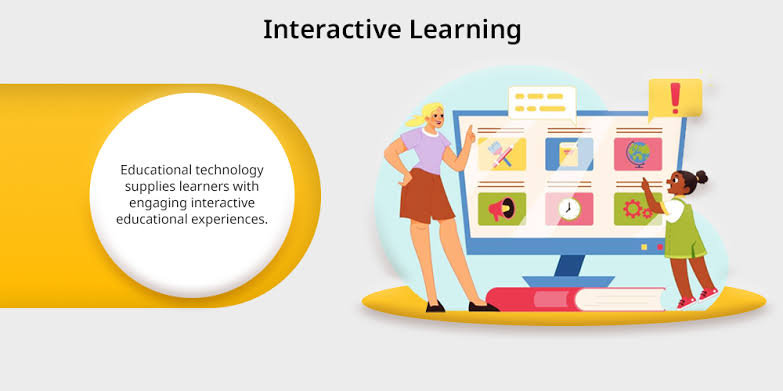

Many subjects become difficult because students try to understand them only by reading or listening. Information enters the mind, but it has little opportunity to connect with experience. As a result, abstract ideas often remain difficult to remember or apply.
Interactive learning changes this process. Instead of receiving information passively, students participate in it. They answer questions, test ideas, solve problems, and receive immediate feedback. Each action strengthens understanding because learning becomes something they do rather than something they simply observe.
This approach works across many disciplines. Science students conduct virtual experiments. Mathematics learners explore interactive simulations. Language students practice conversations instead of memorizing vocabulary lists. History students examine timelines and primary sources to understand how events connect. In every case, participation helps transform information into practical knowledge.
Interactive learning also encourages curiosity. Students are more likely to ask questions when they can immediately test their ideas and see the results. Mistakes become part of the learning process instead of obstacles, helping learners refine their understanding through repeated practice.
As education continues to evolve, interactive learning is becoming an essential part of effective teaching. By combining explanation with participation, it helps students grasp complex concepts more quickly, remember them for longer, and apply them with greater confidence.
Active Participation Turns Information Into Understanding
Practice Makes Complex Ideas More Concrete
Students understand difficult concepts more quickly when they use them.
Solving a problem, testing a hypothesis, or answering a question requires active thinking. Each decision reinforces the lesson because students apply knowledge instead of simply recognizing it on a page. This process is similar to learning to ride a bicycle. Reading instructions helps, but real understanding develops through practice.
Immediate Feedback Improves Learning
Quick feedback prevents small misunderstandings from becoming larger ones.
When students receive an explanation immediately after completing an exercise, they can identify mistakes while the topic is still fresh in their minds. This encourages steady progress and builds confidence because learning becomes a continuous cycle of action, feedback, and improvement.
Readers interested in exploring another example of a platform that delivers continuously updated information through an interactive digital experience can visit this website. Although it focuses on a different subject, it illustrates how responsive systems and timely updates help users stay engaged while exploring changing information.
Exploration Encourages Deeper Thinking
Interactive learning gives students the freedom to investigate ideas from different angles.
They can compare outcomes, revisit earlier lessons, and experiment with different approaches without waiting for the next class. This flexibility encourages curiosity because learners discover relationships for themselves instead of memorizing isolated facts.
When students actively explore a subject, they build stronger mental connections. As a result, complex concepts become easier to understand, easier to remember, and easier to apply in new situations.
Interactive Learning Builds Skills That Last Beyond The Classroom
Learning By Doing Improves Long-Term Memory
Students remember information longer when they actively use it.
Reading a formula explains what it does. Solving several problems with that formula shows when and why it works. This repeated application strengthens memory because knowledge becomes connected to action instead of remaining isolated facts.
The same pattern appears in science, languages, history, and technology. Practice transforms understanding into practical ability.
Collaboration Encourages Better Understanding
Interactive learning often includes discussion and teamwork.
Students explain ideas to one another, compare different approaches, and work together to solve problems. These conversations expose gaps in understanding and introduce new perspectives that may not appear during individual study.
Readers interested in exploring another example of a platform that presents continuously updated information through an organized digital experience can visit this website. Although the subject is different, it demonstrates how responsive digital environments help users engage with evolving information in a structured way.
Confidence Grows Through Active Discovery
Confidence develops from successful experience rather than passive observation.
Each completed exercise, corrected mistake, and solved problem gives students evidence that they can understand challenging material. This growing confidence encourages them to approach more difficult topics with curiosity instead of hesitation.
Over time, interactive learning produces more than stronger academic performance. It helps students develop analytical thinking, problem-solving abilities, and independent learning habits that remain valuable throughout higher education and professional life.
Interactive Learning Prepares Students For Lifelong Success
Interactive learning does more than improve classroom performance. It helps students develop the habits and abilities they will continue using long after formal education ends. By encouraging active participation, it transforms learning from the simple collection of facts into a process of investigation, practice, and continuous improvement.
This approach also reflects how knowledge is used in everyday life. Scientists test ideas through experiments. Engineers solve practical problems. Medical professionals analyze evidence before making decisions. Business teams evaluate data and adjust their strategies as new information becomes available. In each case, progress depends on active engagement rather than passive observation.
The same principle applies to modern educational technology. Students benefit most when digital tools encourage exploration instead of simply delivering information. Readers interested in exploring another example of a platform that presents continuously updated information through an interactive digital experience can visit this website. Although the subject is different, it illustrates how responsive systems can help users stay engaged while following changing information.
Ultimately, interactive learning succeeds because it mirrors the way people naturally develop expertise. They learn by asking questions, testing ideas, receiving feedback, and refining their understanding through experience. As educational methods continue to evolve, approaches that combine clear instruction with meaningful participation will remain among the most effective ways to help students understand complex concepts, retain knowledge longer, and apply what they have learned with confidence in both academic and real-world settings.