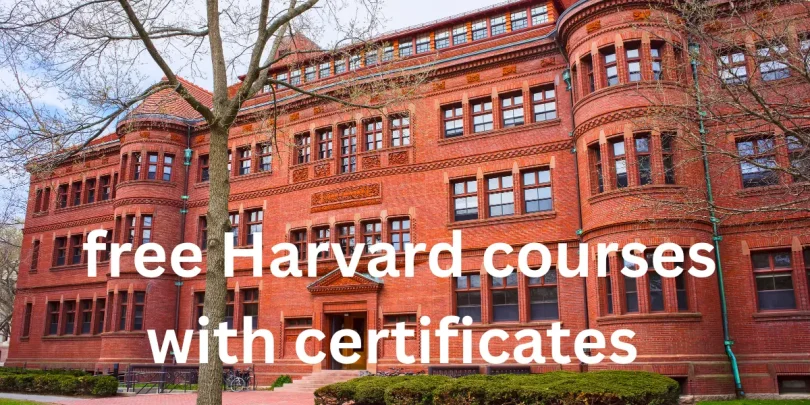

You’ve got work, family, bills, and that tiny corner of your brain that keeps whispering you should learn something new — something that actually looks good on your resume. Real talk: finding time and money for high-quality learning feels impossible sometimes. That’s where free Harvard courses with certificates come in — they sound like the dream combo: world-class learning without the tuition sticker shock, plus a certificate that says you did the work. Sounds good, right? 😊
Here’s the deal: this article is written like a chat between friends. I’ll walk you through what these courses actually are, how to find them, what the certificate part really means, and how to use them so they actually help your career or personal goals — no fluff, just practical steps and friendly encouragement. Let’s go.
What these courses are — quick, simple explanation
Harvard’s online learning opportunities in plain language
Harvard partners with online platforms and runs its own programs so people everywhere can access courses taught by Harvard faculty or instructors affiliated with Harvard. Many of these courses let you take the lessons for free (audit), and some give you the option to get a verified certificate after completing assignments or paying a fee. That certificate acts as proof you completed the course.
Why that matters
A Harvard-branded course carries prestige. Even if it’s short, the name can catch the eye of recruiters or decision-makers. But the real benefit is the skills you gain — and how you package them. 🎯
Where to find free Harvard courses with certificates
Common places to look
Most people find Harvard courses on major platforms where Harvard publishes content. Look on those platforms and Harvard’s official learning pages. Course pages will clearly state whether auditing is free and whether a certificate is available (and if there’s a fee or financial aid).
How to search like a pro
Search for the course title plus “audit” or “verified certificate” and read the course details. Pay attention to start dates and whether the course is self-paced (handy if your schedule’s wild).
Audit vs verified certificate — what’s the difference
What auditing means
Auditing usually lets you access video lectures and some readings at no cost. You learn the material but you won’t get an official certificate for free in most cases.
What a verified certificate is
A verified certificate typically requires identity verification and sometimes graded work. It’s the paid upgrade that gives you an official document (often downloadable) to share on LinkedIn or attach to job applications. Some programs occasionally offer free verified certificates through promotions or financial aid — so always check.
Cost reality and financial help — honestly now
Expectation vs reality
Real talk: most verified certificates aren’t free by default. The course content can be free to access, but showing proof (a certificate) often costs money. That said, there are options to reduce or eliminate cost.
Ways to lower or avoid fees
• Look for financial aid or scholarships on the course platform
• Watch for limited-time promotions where verified certificates are discounted or free
• Some institutions or nonprofits partner to offer free certificates for specific learners
Are these certificates valuable to employers?
Short answer
Yes — when used right. The name “Harvard” opens doors, but what matters most is how you present what you learned.
How to present them so they matter
Talk about the skills you gained, projects you completed, and specific outcomes. Instead of just listing the certificate, explain a brief project or result: “Completed Harvard course on data visualization; built a portfolio project showing a 5-chart dashboard.” That tells employers you can do something tangible.
Choosing the right Harvard course for your goals
Pick by outcome, not by brand
It’s tempting to chase the most famous course, but prioritize relevance. Ask: will this course teach a skill I’ll actually use? Will it deliver a portfolio piece or improve my day-to-day work?
Quick checklist to choose
• Does the syllabus match what you need?
• Is the course length realistic for your schedule?
• Are there graded assignments or projects you can showcase?
• Is the certificate verified and credible?
How to plan your time — because life is busy
Build a realistic weekly plan
Start small. Split course hours into tiny chunks you can actually keep up with — 25–45 minutes a day works wonders. Use calendar blocks and treat them like appointments.
Keep momentum
Set one small goal per week (finish two lectures, submit one assignment). Celebrate small wins — it keeps you going. 🎉
Study tactics that actually work for online courses
Active learning beats passive watching
Don’t just watch videos. Take notes, do exercises, and build something you can show. Try explaining what you learned to a friend or writing a short summary after each module.
Use simple tools
A notebook or a digital doc, a calendar for deadlines, and a portfolio folder where you save projects and screenshots. That’s all you need to start.
Turning course work into real portfolio pieces
Projects > certificates
Employers remember projects. If the course includes assignments, polish one into a portfolio item. Add context: what problem did you solve? What tools did you use? What was the result?
How to showcase on LinkedIn and resume
On LinkedIn, add the certificate to Courses or Licenses & Certifications, and create a short post showing your final project (with a screenshot). On your resume, add the course under education or professional development with one line describing a key deliverable.
Common beginner worries — answered warmly
“I don’t have time.”
Short sessions work. Aim for consistency over long sessions. Even fifteen minutes daily moves you forward.
“I can’t afford the certificate.”
Audit for free, learn the content, and apply for financial aid or wait for promotions. The knowledge itself is valuable even without the certificate.
“Will my lack of formal background matter?”
Not usually. Many courses are beginner-friendly and designed so learners from different backgrounds can follow along. Start with introductory courses and build confidence.
Technical stuff — what to expect from course platforms
Platform basics
Course platforms usually have video lectures, readings, quizzes, discussion boards, and assignment upload options. Some courses are cohort-based with set deadlines; others are self-paced.
Tips for smooth tech experience
Use a reliable browser, keep files organized, and back up your work. If something breaks, contact platform support early — they’re usually helpful.
Certificates and credibility — how official are they?
Types of certificates you might see
• Audit completion (sometimes just a statement of completion)
• Verified certificate (identity-checked, paid upgrade)
• Professional certification (part of a credential pathway, sometimes higher weight)
How to verify authenticity
Most platforms provide a URL or a verification code for certificates. You can share that link in applications so employers can confirm.
How to combine multiple courses into a learning path
Build a mini-curriculum
Pick a few courses that stack — foundational, intermediate, then project-based. For example: fundamentals → practical tool course → capstone project.
Showcase the pathway
When applying for jobs, mention the pathway and the final project you completed. It shows intentional learning, not random clicks.
Networking and community while learning — don’t do it alone
Use discussion boards
Engage in course forums. Ask thoughtful questions and answer others when you can — you’ll learn more and maybe meet collaborators.
Share progress publicly
Make small posts on LinkedIn or Twitter about what you’re learning. People notice consistency and enthusiasm.
Most people think they know the answer—until they hear this twist.
Smart Study Tips for Students to Boost Learning Success
Unlock Your Potential with Study Techniques for Better Learning
Master Your Day: Daily Study Routine for Toppers That Works
Master Your Success with Study Tips for Exams
How to Focus While Studying and Boost Your Learning Power
Real examples of outcomes (anecdotal, friendly tone)
Career pivot wins
People have used online Harvard courses to pivot: a marketer learning analytics, a teacher learning edtech, a manager brushing up on finance. The certificate helped them get interviews, but the projects did the heavy lifting.
Small victories matter
Completing a course during a hectic month is a success. It builds confidence and shows employers you can manage projects under constraints.
Mistakes beginners make — and how to avoid them
Treating the course like a Netflix show
Watching without doing the work won’t stick. Commit to at least one active task per lecture (notes, mini project, quiz).
Not documenting progress
Save screenshots of graded assignments, certificates, and project files. You’ll want these when updating your resume or LinkedIn.
Overloading on courses
Quality beats quantity. Finish a course thoroughly before starting the next one.
How to apply for financial aid or discounts (practical pointers)
Check the course page
Look for “financial aid,” “scholarship,” or “audit” options. Some platforms have dedicated financial aid forms.
Be honest in applications
When asked why you need aid, explain clearly and briefly how the course will help you. It’s often reviewed manually, and genuine answers help.
Certifications that can lead to more advanced study
Pathways to deeper credentials
Some verified certificates can count as prerequisites or credit toward larger programs, like professional certificates or extension school credit. If you want formal academic credit, check the program details carefully before enrolling.
Think long-term
If you plan to pursue more formal study, pick courses that align with those pathways — it keeps future doors open.
How to keep motivation for long-term learning
Make it daily micro-habits
A short, consistent learning habit beats marathon binges. Treat your learning time like brushing your teeth — small, non-negotiable.
Celebrate and reflect
At the end of every module, write a one-paragraph summary of what you learned and one thing you’ll do differently because of it.
Putting it all together — a beginner-friendly roadmap
Start
Choose one course that’s relevant to your immediate goal and has a manageable time commitment.
Learn
Commit to small, regular sessions, do the exercises, and engage in discussions.
Build
Turn at least one assignment into a portfolio piece you can share.
Certify (if possible)
Decide whether paying for the verified certificate is worth it for your goals — if not now, document your learning and consider a certificate later.
Final pep talk before we wrap up
You don’t have to be perfect to start. Free learning options from top schools exist so motivated people like you — juggling life and responsibilities — can build skills, one module at a time. Whether you buy the certificate or not, the knowledge and the projects you create are what truly move the needle.
Conclusion — you’ve got this
Learning from prestigious institutions is more accessible than ever, and free Harvard courses with certificates can be a realistic, strategic part of your personal and professional growth. Keep things practical, be consistent, build portfolio pieces, and don’t forget to celebrate small wins along the way. Real talk: the certificate is a signal, but your skills and projects are the proof employers remember.
Actionable checklist — quick wins you can do today
• Pick one course that matches your goal and skim the syllabus
• Block short learning sessions on your calendar this week
• Audit the course first, then decide about the certificate once you’ve started
• Identify one assignment you can turn into a portfolio item
• Share a short post about your learning progress to build accountability
FAQs
What are free Harvard courses with certificates
They are online learning programs from Harvard that you can take for free, and you can earn a certificate upon completion.
How can I enroll in free Harvard courses with certificates
You can register through Harvard’s online platforms like edX, select the free option, and choose the certificate upgrade if available.
Do employers value free Harvard courses with certificates
Yes, certificates from Harvard are highly respected and can enhance your resume and credibility.
Can I get a free certificate from Harvard without paying
Some courses offer fully free certificates during promotions, but usually the certificate upgrade has a small fee.
Are free Harvard courses with certificates self-paced
Most are self-paced, allowing you to learn at your own schedule, but some have specific start and end dates.