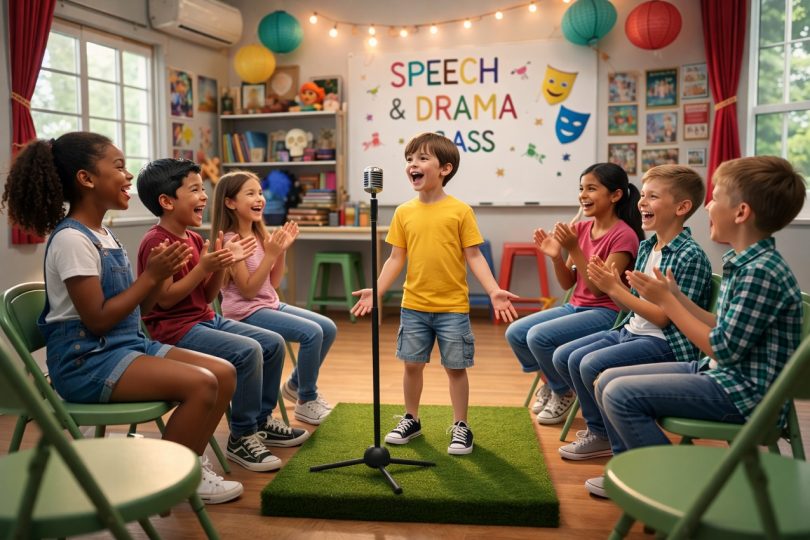

Public speaking and performing arts are two of the most powerful skills a child can develop early in life. From boosting confidence to sharpening communication, the benefits reach far beyond the stage. Enrolling your child in a top speech and drama class sets the foundation for lifelong success in academics, social settings, and professional life. Whether your child dreams of performing on Broadway or simply wants to speak confidently in front of a classroom, these classes offer something transformative for every young learner.
Why Speech and Drama Matter More Than Ever
In today’s competitive world, the ability to communicate clearly and expressively is no longer optional — it’s essential. Schools are increasingly recognizing that traditional academic subjects alone don’t prepare students for real-world challenges. Speech and drama training bridges that gap beautifully.
Children who study speech and drama learn how to articulate thoughts with clarity, project their voice with authority, and connect with an audience emotionally. These are not just performance skills — they are life skills. Research consistently shows that students who participate in drama programs demonstrate higher levels of empathy, stronger reading comprehension, and improved academic performance overall.
Beyond academics, speech and drama classes build a kind of resilience that is hard to teach in a standard classroom. Standing up, speaking out, and potentially making mistakes in front of peers teaches children how to manage nerves, recover gracefully, and keep going — a lesson that serves them throughout their entire lives.
What to Expect in a Quality Speech and Drama Class
A well-structured speech and drama program covers a wide range of disciplines designed to develop the whole performer. Here’s what you can typically expect from a high-quality curriculum:
- Voice training — Students learn proper breathing techniques, pitch control, projection, and articulation to develop a strong, clear speaking voice
- Diction and pronunciation — Focused exercises help children speak clearly and confidently in both formal and informal settings
- Improvisation — Spontaneous performance exercises build quick thinking, creativity, and the ability to stay calm under pressure
- Monologue and dialogue work — Students study and perform scripted pieces, developing character interpretation and emotional expression
- Public speaking skills — Structured lessons on delivering speeches, debates, and presentations help children excel in school and beyond
- Movement and stage presence — Physical training teaches students how to use their body expressively and command attention on stage
- Poetry and prose reading — Exploring literary texts aloud enhances comprehension, rhythm awareness, and vocal variety
- Group performance — Ensemble work builds teamwork, listening skills, and collaborative creativity
Each element works together to shape a student who is not only a confident performer but also a thoughtful communicator and empathetic human being.
Choosing the Right Speech and Drama Class
With so many programs available, finding the right fit for your child requires a bit of research. Here are some important factors to consider when evaluating a speech and drama school or program:
- Qualified instructors — Look for teachers with formal training in performing arts, education, or both, along with genuine experience working with children
- Small class sizes — Personalized attention makes a significant difference in a child’s development, especially in the early stages
- Structured curriculum — A clear progression from beginner to advanced levels ensures continuous growth and keeps students engaged
- Performance opportunities — Regular showcases, recitals, or competitions give students real-world experience and measurable goals to work toward
- Examination boards — Programs affiliated with recognized boards like Trinity College London or LAMDA offer formal certifications that add value to a student’s profile
- Positive environment — A supportive, encouraging atmosphere where mistakes are celebrated as learning opportunities is absolutely essential
Visiting a class, speaking with current students and parents, and observing a session firsthand are the best ways to assess whether a program truly delivers on its promises.
The Long-Term Benefits of Speech and Drama Training
The impact of speech and drama education extends well beyond childhood. Students who train consistently develop a toolkit of skills that gives them a genuine edge in higher education, job interviews, leadership roles, and personal relationships.
Consider the professional world — nearly every career requires some degree of public communication. Lawyers argue cases, doctors counsel patients; teachers inspire students, and entrepreneurs pitch ideas. The ability to speak with confidence, listen actively, and persuade effectively is a universal advantage. Students trained in speech and dramas carry these abilities naturally into adulthood.
On a personal level, drama training fosters emotional intelligence in a way few other activities can match. By inhabiting different characters and exploring diverse human experiences through storytelling, children develop a deeper understanding of the world around them. They become more open-minded, more compassionate, and better equipped to navigate complex social situations.
Speech and Drama for Different Age Groups
One of the most beautiful aspects of speech and drama education is its accessibility across all age groups. Programs are thoughtfully designed to match the developmental needs and interests of each stage:
- Ages 3–6 — Play-based learning through songs, rhymes, and imaginative storytelling builds early language skills and confidence
- Ages 7–11 — Structured lessons in voice, movement, and scripted performance introduce formal techniques in an engaging way
- Ages 12–16 — More advanced curriculum covers stage craft, competitive speaking, and examination preparation for recognized certifications
- Ages 17 and above — Advanced performance training, audition preparation, and public speaking coaching for academic and professional pursuits
Why Lorna Whiston Student Care Stands Apart
When parents choose Lorna Whiston Student Care, they are investing in far more than structured drama lessons. Children step into an environment that genuinely nurtures creative thinking, builds meaningful friendships, and develops the kind of social confidence that shapes character for life. Every session is thoughtfully designed to strengthen not only performing arts abilities but also the everyday communication and interpersonal skills that matter deeply across all areas of growing up.
Speech and drama education is one of the most valuable gifts a parent can give a child, and Lorna Whiston Student Care delivers that gift with intention and expertise. Students graduate from the program ready to embrace every opportunity that comes their way — whether that means standing on a stage, leading a classroom discussion, or simply expressing themselves with clarity and courage. For parents who want their children to grow up articulate, imaginative, and emotionally resilient, Lorna Whiston Student Care offers a proven path toward a bright and expressive future.
Getting Started Today
The best time to enroll your child in a speech and drama class is now. Early exposure to performance arts gives children a head start that compounds over time, building layer upon layer of confidence, creativity, and communication ability. Look for reputable programs in your area, attend an open day, and let your child experience the magic of finding their voice.
Whether your child is naturally shy or already loves the spotlight, a great speech and drama program meets them exactly where they are and takes them somewhere extraordinary.
Jonathan Meyers is a professional education and performing arts writer specializing in speech and drama training, communication skills development, and stage performance education. He creates engaging, informative content that helps parents and students understand the benefits of structured drama classes, confidence-building techniques, and professional performance coaching.