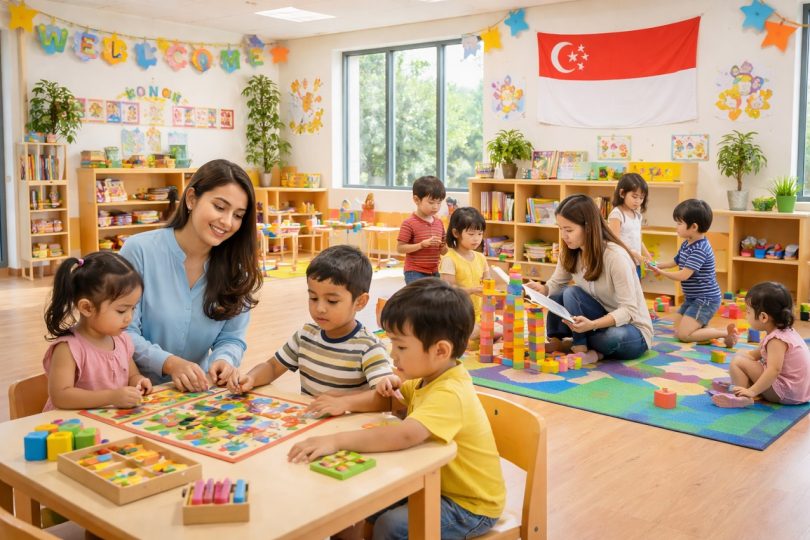

Early childhood is a critical window for developing communication skills that last a lifetime. The way children learn to express themselves, use their bodies, and project their voices lays the groundwork for academic and social success. At Lorna Whiston Schools, a leading Singapore kindergarten known for its innovative approach to early education, drama is harnessed as a powerful tool for holistic learning. Unlike traditional classroom methods, drama engages students on every level — emotionally, physically, intellectually, and socially — making it one of the most effective ways to nurture well-rounded young learners.
Why Communication Is a Challenge for Young Children
Many parents and educators underestimate just how daunting communication can be for young children. Standing up in front of others, speaking clearly, and projecting confidence requires a child to manage multiple challenges at once. Students often struggle with communicating confidently because they feel uncomfortable with the situation itself, the physical space they are in, the audience watching them, and sometimes even the unfamiliar sound of their own amplified voice.
These are not trivial concerns. Nerves get the better of every public speaker or performer who does not feel in control of themselves or their environment. For a five-year-old, walking into a classroom and being asked to speak up can feel overwhelming. Without the right scaffolding, these early experiences of anxiety can solidify into a lifelong reluctance to communicate openly. This is precisely why Lorna Whiston Schools believes that addressing communication confidence must begin early — and drama is the vehicle that makes this possible.
Drama as a Holistic Learning Tool
What makes drama uniquely powerful in a kindergarten setting is that it simultaneously engages the whole child. Cognitive development, emotional regulation, social interaction, and physical coordination are all activated during drama activities. A child acting out a story, voicing a character, or performing a short scene is not just playing — they are practising critical life skills in a safe, supportive environment.
At Lorna Whiston Schools, drama lessons are carefully structured to help children gain awareness and mastery over the use of their bodies and voices. This dual focus is essential. Body language accounts for a significant portion of how we communicate, and children who learn early to use gestures, posture, facial expressions, and movement purposefully become far more effective communicators. Similarly, developing vocal awareness — learning to modulate pitch, pace, tone, and volume — gives children the tools to express themselves with clarity and intention.
Building Body Awareness through Drama
In drama classes at Lorna Whiston Schools, children are guided through exercises that help them understand and control their physical presence. Simple activities such as mime, movement games, and character embodiment encourage children to think consciously about how they hold their bodies and move through space. Over time, these exercises build physical confidence and reduce the self-consciousness that so often silences young communicators.
This body awareness extends beyond the stage. A child who has learned to stand tall, make eye contact, and use purposeful gestures during drama class will naturally carry those habits into classroom presentations, social conversations, and eventually, professional settings. The physical confidence gained through drama becomes a foundation for all future communication.
Finding Their Voice: Vocal Development in Early Childhood
Voice is one of the most personal instruments a child possesses, and many young learners are surprisingly shy about using it. In a drama environment, children are given permission — and encouragement — to experiment freely with their voices. They learn that their voice is a tool that can be shaped, projected, softened, and varied to suit different contexts and audiences.
Drama exercises at Lorna Whiston Schools introduce children to the concept of vocal projection without it feeling like a performance pressure. Through storytelling, character play, and guided improvisation, students discover that their voice can fill a room, convey emotion, and capture an audience. This discovery is transformative for children who might otherwise whisper through their early school years.
Adapting to Space and Audience
One of the most sophisticated communication skills — even for adults — is the ability to read a room and adapt accordingly. Drama training uniquely develops this skill in young children. Over time, students learn to adapt to the physical environment they are in to become more confident communicators. Whether performing on a small classroom stage or speaking during morning assembly, children who have drama training understand how to calibrate their energy, volume, and presence to suit the context.
This adaptability also extends to awareness of audience. Drama activities naturally expose children to the experience of being observed — a situation that triggers nerves in most people. By repeatedly practising in front of peers and teachers in a low-stakes, supportive environment, students gradually desensitise themselves to the discomfort of being watched. They begin to see the audience not as a threat, but as a partner in communication.
A Safe Space to Take Risks
One of the greatest gifts drama gives young children is the freedom to try, fail, and try again without fear of judgment. In a well-facilitated drama class, mistakes are not embarrassing — they are celebrated as part of the creative process. This psychological safety is especially valuable for shy or introverted children who need gentle encouragement to step outside their comfort zones. At Lorna Whiston Schools, teachers create a nurturing classroom culture where every child feels seen, valued, and supported. This environment of trust is what allows students to take the communicative risks that ultimately transform them into confident, expressive individuals.
Drama and Language Development Go Hand in Hand
Beyond confidence and physical expression, drama plays a powerful role in strengthening language skills. When children act out stories, engage in role play, or improvise dialogue, they are actively expanding their vocabulary, practising sentence structure, and experimenting with tone and meaning in context. This makes drama an ideal complement to literacy programmes in the kindergarten years. At Lorna Whiston Schools, the integration of drama with language learning ensures that children not only learn to read and write words — they learn to bring those words to life with purpose and personality, setting them up for strong academic performance and lifelong communication skills.
The Long-Term Benefits of Drama in Kindergarten
The skills cultivated through drama — confidence, vocal expression, physical awareness, adaptability, and emotional intelligence — are precisely the skills that educators, employers, and society value most. Children who engage in structured drama programmes from an early age consistently demonstrate stronger literacy outcomes, better social skills, and greater emotional resilience.
At Lorna Whiston Schools, the commitment to drama as a core component of the kindergarten curriculum reflects a deep understanding of how children learn best. When students are emotionally engaged, physically active, and socially connected, learning becomes joyful and lasting. Drama does not just teach children to perform — it teaches them to communicate, connect, and thrive.
Enrolling your child in a programme that prioritises drama and communication from the earliest years is one of the most meaningful investments you can make in their future. At Lorna Whiston Schools, every child is given the space, support, and encouragement to find their voice — and the confidence to use it.
Vanessa Koh is a professional education and early childhood education writer specializing in Singapore kindergarten programs, foundational academic development, and holistic learning approaches. She creates clear, practical content that helps parents understand curriculum frameworks, classroom methodologies, and important factors to consider when choosing a quality kindergarten in Singapore.