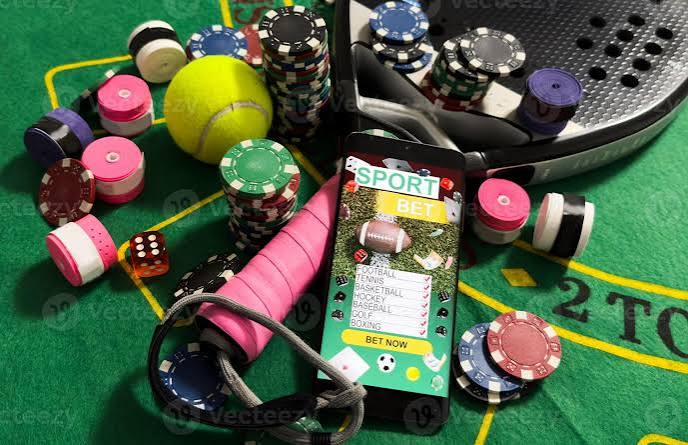

A practical page on sports betting Malaysia starts from the football board, not from a slogan. On a typical Malaysian board the same match carries three families of price: 1X2, Asian handicap, and totals. Each family can be shown in decimal, Hong Kong, or Malay numbers, and each is split again into full time, first half, and in-play. Those are different markets. A home win on the 1X2 can be a losing ticket on a minus 0.75 handicap, and a first-half price is already settled while the full-time price is still live. This walkthrough stays on football. Every score and every price below is an example built to show the sums. None of it is a live board, a tip, or a result to expect on a given weekend.
What the full-time 1X2 actually settles
The 1X2, sometimes labelled match result or 1X2 FT, has three outcomes. 1 is the home side, X is the draw, 2 is the away side. On a standard football board this market settles on 90 minutes plus the referee’s stoppage time. Extra time and penalties are not included unless the market title says “including extra time,” “to qualify,” or “to lift the trophy.” If you want the team that advances from a knockout tie, you are on a different market from the 90-minute 1X2.
Read an example board, not a real fixture. Example prices only: Home 1.91, Draw 3.40, Away 4.20. If the example match finishes 2-0, the Home ticket wins and Draw and Away lose. If it finishes 1-1, only Draw wins. If it finishes 0-1, only Away wins. A late goal in the fifth minute of stoppage still counts, because stoppage time is part of full time. A goal in extra time does not, on this particular market.
Double chance is a cousin of the 1X2, not a handicap. 1X pays if the home side wins or the match draws. X2 pays on the away win or the draw. 12 pays if either side wins and loses only on a draw. The price is shorter than either single outcome because you are covering two of the three results. It still settles on the same 90-minute clock as the ordinary 1X2.
European handicap, sometimes called 3-way handicap, is easy to confuse with the Asian line sitting next to it. On a European Home -1, the home side must win by two or more for that selection to win. A one-goal home win settles as the draw on that handicap, and the draw selection is the winner. There is no push. Asian Home -1, explained below, returns the stake on a one-goal home win. Same numbers on the screen, different market. Check the market name before you confirm the slip.
Asian handicap 0 and 0.5, with example scores
Asian handicap moves the match by goals, or by fractions of a goal, before the result is graded. On a sports betting Malaysia football board the point of the line is to split a lopsided match into two sides of a two-way bet. There is no draw column. A result that lands exactly on a whole-number line is a push: the stake comes back, and there is no profit.
Handicap 0 is the level ball, sometimes called DNB in other countries, though the label on an Asian board is usually 0 or 0.0. You need your side to win the match. An example only: you back the home side at 0. Example score 2-1 to the home side is a win. Example score 0-1 is a loss. Example score 1-1 is a push, and the stake is returned. The away side at 0 is the mirror: the away side must win the match, and a draw pushes.
Handicap 0.5 is a half-ball line, so a draw is no longer a push. Example only: Home -0.5 wins if the home side wins by any score, and loses if the match is a draw or an away win. Away +0.5 wins if the away side wins or if the match is drawn, and loses only if the home side wins. A 1-0 home win, a 3-1 home win, and a 1-0 away win are three different tickets once you have picked a side and a sign. Write the sign down. Minus means your side is giving the start. Plus means your side is receiving it.
Quarter lines: how 0.25 and 0.75 split the stake
A quarter-goal line is two bets of half your stake. Boards often print 0.25 as 0 / 0.5, and 0.75 as 0.5 / 1. The settlement is identical either way. Because the stake is split, the result can be a full win, a half win, a push, a half loss, or a full loss. The price applies to each half. For the examples in this section, take an example price of decimal 1.90, which is a 0.90 profit on whatever portion wins, and a stake of RM100. That price is an illustration, not a quote from a book.
Home -0.25 splits the RM100 into RM50 on Home 0 and RM50 on Home -0.5. Example score 2-0: both halves win, profit is RM45 plus RM45, and the return is RM190. Example score 1-1: the level half pushes and returns its RM50, the half-ball half loses RM50, so you get RM50 back and the result is a half loss. Example score 0-1: both halves lose, and the return is RM0. Away +0.25 is the other side of the same line. An away win is a full win, a draw is a half win, and an away loss is a full loss.
Home -0.75 splits RM100 into RM50 on Home -0.5 and RM50 on Home -1, still at the example price of 1.90. Example score 3-1, a two-goal win: both halves win, profit RM90, return RM190. Example score 1-0, a one-goal win: the -0.5 half wins (profit RM45) and the -1 half pushes (RM50 back), so the return is RM145 and the result is a half win. Example score 1-1, or any away win: both halves lose. Away +0.75 wins in full if the away side wins or draws, loses half the stake if the away side loses by exactly one, and loses in full if the away side loses by two or more.
The one-goal line, and why a 1-0 can be a push
Handicap 1 is a whole number again, so pushes return. It does not split. Example only, Home -1 at decimal 1.90 with RM100 staked. Example score 2-0: the home side covered the one-goal start, profit RM90, return RM190. Example score 1-0: after you subtract the one-goal start the match is level, so the ticket pushes and RM100 comes back. Example score 2-1 is the same push, because the margin is still one. Example score 1-1 or 0-2: the ticket loses.
Away +1 at the same example price wins in full if the away side wins or draws, pushes if the away side loses by exactly one, and loses if the away side loses by two or more. A reader who only looks at the final score, and not at the margin, will mis-grade this line every week. 1-0 to the favourite is not “a winner” on -1. It is a refund.
Larger whole and quarter lines follow the same pattern. Home -1.5 needs a win by two or more, and there is no push. Home -1.25 splits into -1 and -1.5, so a one-goal win is a half loss and a two-goal win is a full win. Home -1.75 splits into -1.5 and -2, so a two-goal win is a half win and a three-goal win is a full win. Once 0, 0.25, 0.5, 0.75, and 1 are clear, every other line on the board is the same idea with a different number of goals.
Totals: 2.5, the quarter totals, and the push
Totals, or over/under, ignore which side scores. They grade the number of goals in the period named on the market. A sports betting Malaysia totals row is still football, not a different sport. Over 2.5 wins on three or more goals and loses on zero, one, or two. Under 2.5 is the opposite. There is no push on 2.5, because a match cannot finish on half a goal. The same is true of 0.5, 1.5, 3.5, and every other half-goal total.
Use one example score so the fractions stay comparable. Example only: the match finishes 2-1, three goals. Over 2.5 wins. Under 2.5 loses. Over 3 pushes, because the line is a whole number and the total landed on it. Under 3 also pushes. Over 3.5 loses. Under 3.5 wins.
Quarter totals split the stake the way quarter handicaps do. Over 2.25 is half on over 2 and half on over 2.5. On the example 2-1, three goals clear both halves, so the bet wins in full. Change the example score to 2-0, two goals. Over 2 pushes, over 2.5 loses, and over 2.25 is a half loss. Under 2.25 on that 2-0 is a half win. Over 2.75 is half on over 2.5 and half on over 3. On the 2-1 example, over 2.5 wins and over 3 pushes, so over 2.75 is a half win. On a 2-2 example, four goals, over 2.75 wins in full because both halves clear.
Team totals are a different market from the match total. “Home over 1.5” looks only at the home side’s goals. A 1-1 draw loses home over 1.5 and wins the match over 1.5. Read the team name on the row before you treat two “over” prices as the same bet.
Decimal odds, implied probability, and the margin in the price
Decimal odds show the total return per one unit staked, including the stake, if that selection wins in full. An example price of 1.90 returns RM190 from a RM100 stake on a full win: RM90 profit and the RM100 back. A half win at 1.90 returns half the profit. A push returns the stake with no profit. A half loss returns half the stake. The handicap rules and the odds format are separate. The line decides which of those five results you get. The odds decide the money attached to a winning half.
Implied probability is 1 divided by the decimal price. Example only, using the 1X2 prices from earlier: Home 1.91 implies about 52.4 percent, Draw 3.40 implies about 29.4 percent, Away 4.20 implies about 23.8 percent. Add them and you get about 105.6 percent, not 100. The extra 5.6 points are the overround, the book margin built into this example board. It is not a tipster’s edge, and it is not removed by backing all three outcomes. Backing all three at these example prices locks in a loss roughly the size of that margin, before you even think about a score.
You can rescale the example so the three figures sum to 100, by dividing each implied figure by 1.056. That gives a rough no-margin split near 49.6 percent, 27.8 percent, and 22.6 percent. Books move those numbers with team news, the market, and their own position. A shorter price is a stronger quoted chance and a smaller profit if it wins. A longer price is the reverse. Neither one is a promise that the match will land there.
Malay and Hong Kong formats on the same price
Hong Kong odds show profit only. Decimal equals Hong Kong plus 1. An example HK price of 0.90 is decimal 1.90. Stake RM100 at HK 0.90 and a full win pays RM90 profit, RM190 back. HK 1.25 is decimal 2.25, and a full win on RM100 pays RM125 profit. The conversion does not change the handicap result. It only changes how the profit is written. Readers who switch a sports betting Malaysia board into Hong Kong numbers should convert back to decimal before they compare two matches.
Malay odds sit between -1 and +1, and the sign changes the reading. When the decimal price is 2.00 or shorter, Malay is positive and matches the Hong Kong number. Decimal 1.90 is Malay 0.90: risk RM100 to win RM90. When the decimal price is longer than 2.00, Malay turns negative. Decimal 2.25 is HK 1.25 and Malay -0.80, because -1 divided by 1.25 equals -0.80. On that negative example you risk 0.80 units to win 1 unit. Risk RM80 to win RM100 profit, or risk RM100 to win RM125 profit. Both are the same ratio. Books differ on whether the number you type is the amount at risk or the amount you want to win, so read the slip’s stake and potential-win lines before you confirm. A minus sign is not a typing error.
Indonesian odds are a third display you may see in a settings menu. Below even money they are more negative than Malay: decimal 1.80, which is HK 0.80 and Malay 0.80, is about Indo -1.25, meaning you risk 1.25 to win 1. Above even money, Indo matches HK. If a price suddenly looks enormous or tiny after you change the format, convert it back to decimal before you judge it. The underlying market did not change.
Full time, first half, and the in-play clock on a sports betting Malaysia board
Full time, first half, and in-play are three clocks, not three skins of one bet. First-half 1X2, first-half handicap, and first-half totals all settle at the break. An example only: the score is 1-0 at half time and 1-1 at full time. A first-half home 1X2 wins. A full-time draw 1X2 wins. A first-half over 0.5 wins. A full-time over 1.5 also wins, but a full-time home -0.5 loses. Grading a first-half ticket from the full-time score is the most common self-inflicted argument with a book.
In-play prices are new offers on whatever time and score remain. A goal, a penalty, or a red card usually suspends the market while the price is rebuilt. A bet already accepted keeps the line and the odds you took. It is not rewritten to the new number. A bet that was still in the slip, and not accepted before the suspension, is not on that match. Next-goal and rest-of-match markets are narrower still: next goal can lose for both teams if nobody scores again, depending on whether a “no goal” selection was offered, and rest-of-match ignores the goals already on the board. Read the title of the row.
Cash-out, on books that show it, is a fresh price to close the ticket early. It is not the original odds, and it is not an obligation. The offer moves with the score and the clock, and it can disappear when the market suspends. Corners, cards, and bookings sit on their own settlement rules and their own clocks. A goal handicap does not pay because a match was one-sided on corners.
sports betting Malaysia football boards are readable once each ticket is graded from the market name, the sign on the line, the period, and the format printed on the slip. Keep 1X2, Asian handicap, and totals apart, convert Malay and Hong Kong prices back to decimal when you want the implied chance, and do not let an in-play number rewrite a ticket that was already accepted.