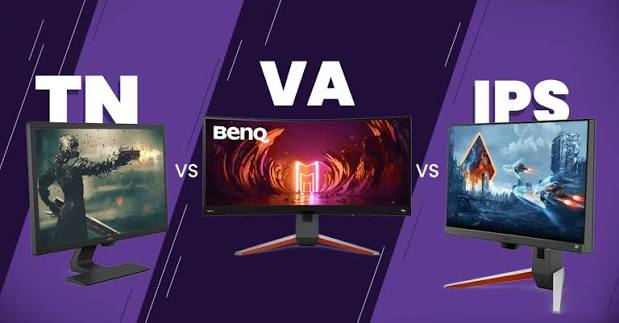

Two monitors can have identical sizes, resolutions and refresh rates and still look completely different on your desk. One has rich, accurate colour. Another has deep blacks. A third is lightning fast but looks washed out from the side. The difference usually comes down to the technology inside the screen, known as the panel. Understanding monitor panel types isn’t glamorous, but it’s one of the best ways to avoid buying a screen that disappoints. This guide explains the three main kinds, what each does well and how to match one to the slot gacor gampang menang you actually play.
What a panel is
The panel is the part of the monitor that makes the picture. It controls how liquid crystals bend light to produce colours and brightness. Different designs have different strengths, and manufacturers build monitors around them.
The specifications on the box, such as size and refresh rate, don’t tell you everything. The panel type affects colour, contrast, viewing angles and response speed.
TN panels
Twisted nematic panels are the oldest of the three, and they’re known for speed. They typically offer very fast response times and are often cheaper.
- Very quick response, useful for fast competitive games
- Lower prices on many models
- Weaker colours that can look washed out
- Poor viewing angles, so the picture shifts if you sit off-centre
TN panels once dominated competitive gaming. Newer designs have closed much of the speed gap, so they’re less essential today.
IPS panels
In-plane switching panels are popular for good reason. They offer accurate, vivid colours and wide viewing angles, so the picture looks consistent from almost any position.
Modern IPS monitors are also fast, and many suit competitive gaming. Their downsides are a lower contrast ratio, which means blacks can look greyish in a dark room, and a possible glow around the edges in dim conditions. They also tend to cost more than TN models.
VA panels
Vertical alignment panels are known for contrast. They produce deep blacks, which makes dark scenes and movies look rich and dramatic.
Their weaknesses are response time and, on some models, motion smearing in fast scenes. Viewing angles are better than TN but not as good as IPS. VA panels suit single-player games, atmospheric adventures and anyone who watches a lot of video on their monitor.
Comparing the three
Here’s a simple way to see the differences. TN focuses on speed and price. IPS focuses on colour and consistency. VA focuses on contrast and depth.
None is simply better. The right choice depends on what you value and what you play. A competitive player who sits straight in front of the screen may be happy with a fast TN or IPS panel. A person who loves cinematic games may prefer VA. Someone who does creative work or shares the screen with others will probably favour IPS.
Don’t ignore the details
Panel type is only part of the picture. Response time, refresh rate, brightness, resolution and size all matter, and quality varies between models of the same panel type. Reading independent reviews and looking at motion tests is wise.
Marketing can be misleading. A quoted response time may be measured under favourable conditions, and real-world performance can differ.
Newer technologies
Other types exist, including OLED screens, which light each pixel individually. They offer perfect blacks and very quick response, but they cost more and can have concerns around long-term image retention. They’re worth considering if you have the budget and use the screen sensibly.
Calibration helps whichever type you choose. Many monitors ship with oversaturated colours or an overly bright default. Spend ten minutes adjusting brightness, contrast and colour mode, or load a profile from a trusted review. A well-tuned mid-range panel often looks better than a poorly set up expensive one.
How to choose
- List the link slot gacor you play most.
- Decide whether speed, colour or contrast matters most.
- Check your room’s lighting, since dark rooms favour contrast.
- Set a budget and read reviews of specific models.
- If possible, look at the screen in person before buying.
Your own eyes are the best test. What looks good to a reviewer might not suit you.
Think about your seating position and room too. If you sit close and slightly off-centre, viewing angles matter more. If your room is bright, a glossy or low-contrast screen may reflect lights and wash out. A matte finish and decent brightness handle daytime play better. These practical details often matter more than a single number on a specification sheet.
Frequently asked questions
Which of the monitor panel types is best for gaming?
It depends on your priorities. IPS is a strong all-rounder, TN is fast and affordable, and VA offers deep contrast.
Are IPS monitors fast enough for competitive games?
Many modern IPS monitors are quick enough for competitive play. Check response time reviews for the model you’re considering.
Is VA good for fast shooters?
Some models are, but others show smearing in fast motion. Check reviews before you buy.
The short version
Match the panel to your play. TN for speed on a budget, IPS for colour and all-round quality and VA for rich contrast. Understanding monitor panel types saves you from a screen that looks great on paper and wrong on your desk.