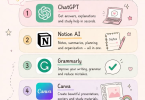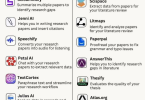
Every student now has access to software that can summarise a chapter, explain a formula or draft an essay outline in seconds. Used badly, these tools hollow out your education. Used well, they are like a patient tutor who never sleeps. The difference lies in a handful of habits. This guide shows how AI tools for students can genuinely improve learning — and the lines you should never cross if you want the grade and the knowledge behind it.
Use AI to Explain, Not to Answer
The best study use of AI is explanation. Paste in the paragraph from your textbook that will not click and ask for it in simpler words, with an everyday example. Ask follow-up questions until the idea feels obvious, then close the tool and write the explanation yourself. If you cannot reproduce it unaided, you have found exactly what to study next.
Worked examples work the same way. Ask for a similar problem to the one in your homework, solved step by step, then attempt your actual problem alone. The tool supplies the model; you supply the effort. This pattern — example first, attempt second — turns AI tools for students into training wheels that strengthen the rider, rather than a motor that carries a passenger.
Generate Practice and Get Feedback
Testing yourself is the most effective study method known, and AI makes it effortless. After reading a topic, ask for ten practice questions at your level, answer them without help, then ask for marking with explanations. Wrong answers become a personalised revision list, written from your real mistakes rather than a generic chapter summary.
Feedback on your own writing is equally valuable. Draft the essay yourself, then ask the tool to identify unclear sentences, weak arguments and missing evidence — without rewriting it for you. You decide which suggestions to accept, which keeps the voice and the learning yours. Teachers can usually tell the difference, but more importantly, so can your future self in the exam room.
Plan, Organise and Summarise — Carefully
AI is excellent at the clerical work around studying. It can turn a syllabus into a week-by-week revision plan, summarise your own lecture notes into revision cards, and quiz you from them later. It can reformat a messy bibliography and check your arithmetic. These uses save hours without costing understanding, because the thinking was always yours.
Summaries deserve one warning: a summary is a map, not the territory. Use AI summaries to preview a chapter before reading it, or to review after — never as a substitute for the reading itself when the details matter. If an exam question can be answered from the summary alone, it was never testing much in the first place, and lecturers know how to write questions that do.
Know the Risks: Errors, Privacy and Rules
AI systems invent facts confidently. Names, dates, quotations and references can all be fabricated, so verify anything important against your textbook or a trusted source. Treat every AI answer as a draft from a clever friend who sometimes guesses — helpful, fast and in need of checking.
Privacy matters just as much. Do not paste personal data, other people’s work or unpublished research into tools whose data policies you have not read. The questions in this overview of data deletion and controlling your information are worth asking of any platform you use regularly. And know your institution’s rules: most schools welcome AI for practice and feedback while forbidding it in assessed work. When in doubt, ask your teacher — asking is always cheaper than an academic misconduct meeting.
A Simple Rule for Every Assignment
Before using AI on any task, ask one question: “Will I still be able to do this myself afterwards?” If the answer is yes — because the tool explained, quizzed or critiqued — proceed happily. If the answer is no, the tool is doing the learning in your place, and the cost will arrive later, with interest.
Students who thrive with AI tools for students treat them as gym equipment: the machine provides resistance, but your muscles do the work and keep the strength. Build that habit now, and you gain a lifelong advantage — the ability to learn new subjects quickly with powerful help, while remaining the person who actually understands them.
Subject-by-Subject: Where AI Helps Most
Some subjects suit AI help especially well. In languages, conversation practice and instant correction of your sentences accelerate fluency in a way textbooks never could. In mathematics, step-by-step models of similar problems teach method without giving away your homework’s answers. In science, asking “why” repeatedly — why is the sky blue, why does that reaction speed up — builds the causal understanding that exams reward.
In essay subjects, use AI as an opponent rather than an author. Ask it to argue against your thesis, to find the weakest paragraph in your draft, or to suggest what a sceptical reader would ask next. Wrestling with a tireless critic sharpens your position before a human ever marks it. The common thread across subjects is that you arrive with questions and leave with understanding, rather than arriving with a task and leaving with a product.
Build Prompts That Teach You More
How you ask determines what you learn. Vague prompts get vague answers, so be specific: name your level, the topic, what you have already tried and where you got stuck. “Explain photosynthesis like I am twelve, then give me three questions to check I understood” produces a lesson; “write about photosynthesis” produces a paragraph you will copy and forget.
Keep a small library of your best prompts — the explainer, the quiz-maker, the critic, the planner — and refine them as you learn what works. This is a genuinely new literacy: directing a powerful tool precisely is a skill employers will value long after today’s interfaces are forgotten. Students who master prompting as a study technique, not a shortcut, are building exactly that.
Start with one tool, one subject and one habit from this page, and let results — not novelty — decide what you add next.
Your physical state shapes how well any of this works, too. AI can schedule your revision, but it cannot sleep for you. Students who keep a steady daily routine — daylight, movement, regular meals and a consistent wind-down, much like the simple consistency behind a daily routine that keeps skin healthy and glowing — find their practice sessions sharper and their recall stronger. Smart tools plus a cared-for brain is the combination that actually raises marks.