
Using a public restroom is a routine part of travelling, working outside the home, shopping, or attending events. However, shared bathrooms do not always offer the same level of cleanliness and comfort that people expect from their bathrooms at home. Wet seats, visible residue, limited supplies, and the absence of convenient disposal facilities can make restroom visits uncomfortable.
For many people, the concern is not just cleanliness but also confidence. They may hesitate to sit on a toilet seat, particularly when the surface appears wet or poorly maintained. This can lead to uncomfortable hovering, awkward positioning, or avoiding public restrooms for longer than necessary.
Disposable toilet seat covers offer a simple way to create a temporary barrier between the user and the toilet seat. When chosen and used correctly, they can make bathroom visits feel more convenient and comfortable, especially during travel or when using shared facilities.
Why Public Restroom Hygiene Matters
Public restrooms are used by many people throughout the day. Offices, shopping centres, airports, railway stations, hotels, restaurants, and highway facilities all experience different levels of foot traffic and cleaning frequency.
Even when a restroom is maintained regularly, conditions can change between cleaning cycles. Water splashes, residual moisture, and visible dirt may affect how comfortable someone feels using the facilities.
Good restroom hygiene involves several elements:
- Regular cleaning and disinfection of appropriate surfaces.
- Access to soap and running water for handwashing.
- Proper waste disposal and functioning plumbing.
- Clean, dry toilet seats wherever possible.
- Adequate ventilation and maintenance.
Personal hygiene products can complement these measures, but they cannot replace proper restroom cleaning. A disposable seat cover is best understood as a convenience product that creates a temporary layer over the seat, rather than a substitute for maintaining a clean bathroom.
What Are Disposable Toilet Seat Covers?
Disposable toilet seat covers are lightweight, single-use sheets placed over a toilet seat before use. They are designed to provide a temporary barrier between the person and the seat surface.
Depending on the product, covers may be made from paper or other specially designed materials. Some are intended for disposal in a waste bin, while others are specifically manufactured and labelled as flushable.
Their practical appeal comes from their simplicity. A cover can be carried in a handbag, backpack, office bag, or travel kit and used when a public restroom does not feel comfortable.
Disposable Flushable Toilet Seat Covers combine the convenience of a single-use cover with a design intended for flushing after use. However, flushability should always be confirmed through the product’s instructions rather than assumed from its appearance or material alone.
How Toilet Seat Covers Can Make Bathroom Visits More Comfortable
1. They Create a Temporary Barrier
One of the main reasons people use a toilet seat cover is to avoid direct contact with the toilet seat surface.
Placing a cover over the seat creates a layer between the user and the underlying surface. This may provide additional peace of mind when using a shared restroom, particularly when the seat looks damp or when the user prefers not to sit directly on it.
However, a disposable cover should not be considered a guarantee against germs or infection. Its effectiveness depends on the product, correct placement, and the condition of the restroom. Handwashing and proper cleaning remain essential parts of hygiene.
2. They Can Reduce the Need to Hover
Some people avoid sitting on public toilet seats and instead try to hover above them. Although this may feel like a practical workaround, it can be uncomfortable, especially for people with mobility limitations or those using a restroom during a long journey.
A seat cover offers another option for people who prefer a temporary barrier before sitting down.
Comfort is personal, and a cover does not mean every public toilet is suitable for use. If a seat is visibly soiled, it is better to choose another facility when possible or follow appropriate cleaning guidance.
3. They Are Convenient for Travel
Travel often means using restrooms with varying maintenance standards. Airports, railway stations, bus terminals, petrol stations, and highway restaurants may all be part of the same journey.
Carrying a few disposable covers can help people prepare for situations where supplies are limited or where they would prefer an additional barrier.
Compact packaging also makes them practical for office commutes, road trips, holidays, and long-distance travel. Individually wrapped covers can be easier to store and carry without exposing unused sheets to other items in a bag.
4. They Support a More Comfortable Routine
For some users, discomfort in public restrooms comes from uncertainty about the seat’s condition. Having a personal hygiene item available can make the experience feel more manageable.
This can be particularly relevant for frequent travellers, people who work outside the home, parents accompanying children, and anyone who regularly uses shared bathroom facilities.
The goal is not to create fear about public toilets. It is to provide a practical option for people who feel more comfortable using a disposable barrier.
What Should You Look for in a Toilet Seat Cover?
Not every disposable seat cover offers the same features. Before choosing one, consider the following characteristics.
Material and Coverage
The material should be suitable for its intended use and comfortable to handle. Size also matters because the cover needs to fit the toilet seat reasonably well.
A cover that is too small or poorly positioned may leave sections of the seat uncovered. Check the manufacturer’s dimensions and product images to understand how the cover is designed to fit.
Portability
For everyday travel, a compact product is generally easier to carry. Individual wrappers can help keep unused covers separate from other items in a bag.
Think about how frequently you use public restrooms and whether a small pack would suit your daily routine or whether a larger pack would be more convenient for regular use.
Clear Disposal Instructions
Disposal is an important part of choosing a seat cover. Some disposable covers belong in a waste bin, while others may be specifically designed for flushing.
Do not assume that a product is flushable simply because it is made from paper or marketed as environmentally considerate. Follow the manufacturer’s directions and consider the plumbing system in the facility.
Transparent Product Information
A product description should explain its intended use, material, size, and disposal method. Specific information is more useful than broad claims about hygiene or sustainability.
If a brand makes claims about biodegradability, compostability, or flushability, check what those claims actually cover. These terms describe different characteristics and should not be treated as interchangeable.
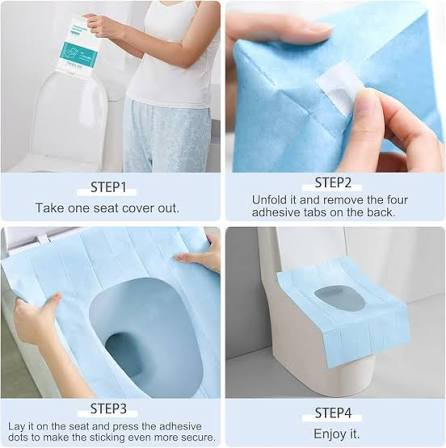
How to Use a Disposable Toilet Seat Cover
Using a disposable seat cover is straightforward, but a few simple steps can help make the process more convenient.
- Check the restroom first. If the toilet seat is visibly soiled or the facility appears poorly maintained, consider using another stall or restroom.
- Open the cover carefully. Remove one cover from its packaging and avoid placing it on a dirty surface.
- Position it over the seat. Arrange the cover according to the manufacturer’s instructions so it provides the intended coverage.
- Use the toilet normally. Avoid unnecessary contact with surrounding surfaces.
- Dispose of the cover correctly. Flush it only if the specific product is labelled and instructed for flushing. Otherwise, place it in an appropriate waste bin.
- Wash your hands. Use soap and water after using the restroom, regardless of whether a seat cover was used.
These steps help integrate the product into a practical hygiene routine without making restroom use unnecessarily complicated.
Are Flushable Toilet Seat Covers Better Than Regular Disposable Covers?
The main difference is the intended disposal method.
A conventional disposable cover may need to be placed in a bin after use. A specifically designed flushable cover is intended to break apart under suitable flushing conditions, according to the manufacturer’s instructions.
Neither type should automatically be considered more hygienic simply because of its disposal method. Both should be assessed according to their material, fit, intended use, and product information.
Flushability also does not mean that every cover is appropriate for every toilet or drainage system. Public facilities may have different plumbing arrangements, and local instructions should take priority.
When there is no clear information about flushability, using a waste bin is generally the safer option.
Understanding the Difference Between Flushable and Eco-Friendly Products
Consumers increasingly look for hygiene products that offer convenience while also considering their environmental impact. However, terms such as “flushable,” “biodegradable,” and “eco-friendly” describe different things.
- Flushable refers to a product designed and identified for disposal through a toilet under specified conditions.
- Biodegradable refers to the ability of a material to break down through biological processes under suitable conditions.
- Compostable refers to a material that meets particular requirements for breaking down in a composting environment.
- Eco-friendly is a broad term that requires more specific information to explain a product’s environmental benefits.
A product may meet one description without meeting the others. For example, a biodegradable material is not automatically suitable for flushing, and a flushable product is not necessarily compostable at home.
The same distinction is relevant when evaluating other personal hygiene products, including eco-friendly sanitary pads. Consumers should examine the product’s materials, disposal instructions, and evidence supporting environmental claims rather than relying on a broad label alone.
Responsible disposal matters because even products designed for convenience can cause problems if used outside their intended conditions.
Exploring Flawsome Flushable Toilet Seat Covers
For people who prefer carrying a personal hygiene product for shared bathrooms, Flawsome offers Flushable Toilet Seat Covers. The product page describes soft, sturdy paper covers designed for single use and identifies them as flushable.
The listed product is available in pack sizes of 10, 20, and 30. The page also describes the covers as compact and individually wrapped, making them suitable for carrying in a bag or travel kit.
These features may be useful for people who frequently use public restrooms at offices, airports, railway stations, hotels, or other shared facilities. As with any flushable product, users should follow the current packaging and manufacturer’s disposal instructions and respect any restrictions displayed in the restroom.
Product information can help consumers compare size, portability, and disposal convenience before deciding whether the covers suit their routine.
Who May Find Disposable Toilet Seat Covers Useful?
Disposable toilet seat covers may be worth considering for a range of everyday situations.
Frequent travellers: People taking road trips, flights, trains, or buses may appreciate having a compact cover available when restroom conditions vary.
Office commuters: Employees who regularly use shared workplace bathrooms may prefer keeping a small pack in their desk or bag.
Students: Those using school, college, or university facilities may find disposable covers convenient to carry between classes.
Parents and caregivers: A portable cover can be one of several items kept in a travel hygiene kit for bathroom visits away from home.
People who prefer an additional barrier: Some individuals simply feel more comfortable placing a cover over a shared toilet seat.
A cover is an optional convenience, not a requirement for everyone. Good hand hygiene, appropriate restroom maintenance, and sensible product disposal remain important regardless of personal preferences.
Frequently Asked Questions
Do disposable toilet seat covers improve public restroom hygiene?
They provide a temporary barrier between the user and the toilet seat. They do not replace cleaning, handwashing, or other hygiene measures, and they should not be treated as a guarantee against infection.
Are all disposable toilet seat covers flushable?
No. Some are designed for flushing, while others should be discarded in a waste bin. Always check the manufacturer’s instructions.
Can I carry toilet seat covers in my handbag?
Yes. Compact, individually wrapped covers can be convenient to carry in a handbag, backpack, or travel kit. Check the packaging to keep unused covers clean and dry.
Are flushable toilet seat covers environmentally friendly?
Flushability alone does not establish a product’s overall environmental impact. Consider the material, disposal instructions, manufacturing information, and evidence behind any environmental claims.
Should I use a seat cover if a public toilet looks dirty?
A cover does not make a visibly soiled toilet clean. If possible, choose a cleaner facility or another stall. Follow appropriate hygiene practices and wash your hands afterward.
Can I flush a toilet seat cover in every public restroom?
No. Follow the product’s instructions and any signs or restrictions posted in the restroom. If flushability is unclear, dispose of the cover in an appropriate bin.
Conclusion
Public restroom visits are an ordinary part of daily life, but shared facilities can sometimes feel uncomfortable. Disposable toilet seat covers offer a simple, portable option for people who prefer a temporary barrier between themselves and the toilet seat.
When choosing a cover, consider its fit, material, portability, and disposal instructions. Do not assume that every disposable product is flushable or that using a cover replaces proper hygiene practices.
For people who travel frequently or regularly use shared bathrooms, keeping a small hygiene kit can make restroom visits more convenient. A thoughtfully selected seat cover can be one useful addition, alongside handwashing and responsible disposal.
Ultimately, public restroom comfort comes from combining practical personal habits with clean, well-maintained facilities and products that are used according to their intended purpose.